

Let the Market Set the Price of Debt, and Show Us What Reality Looks Like
Bad Policy Has Consequences
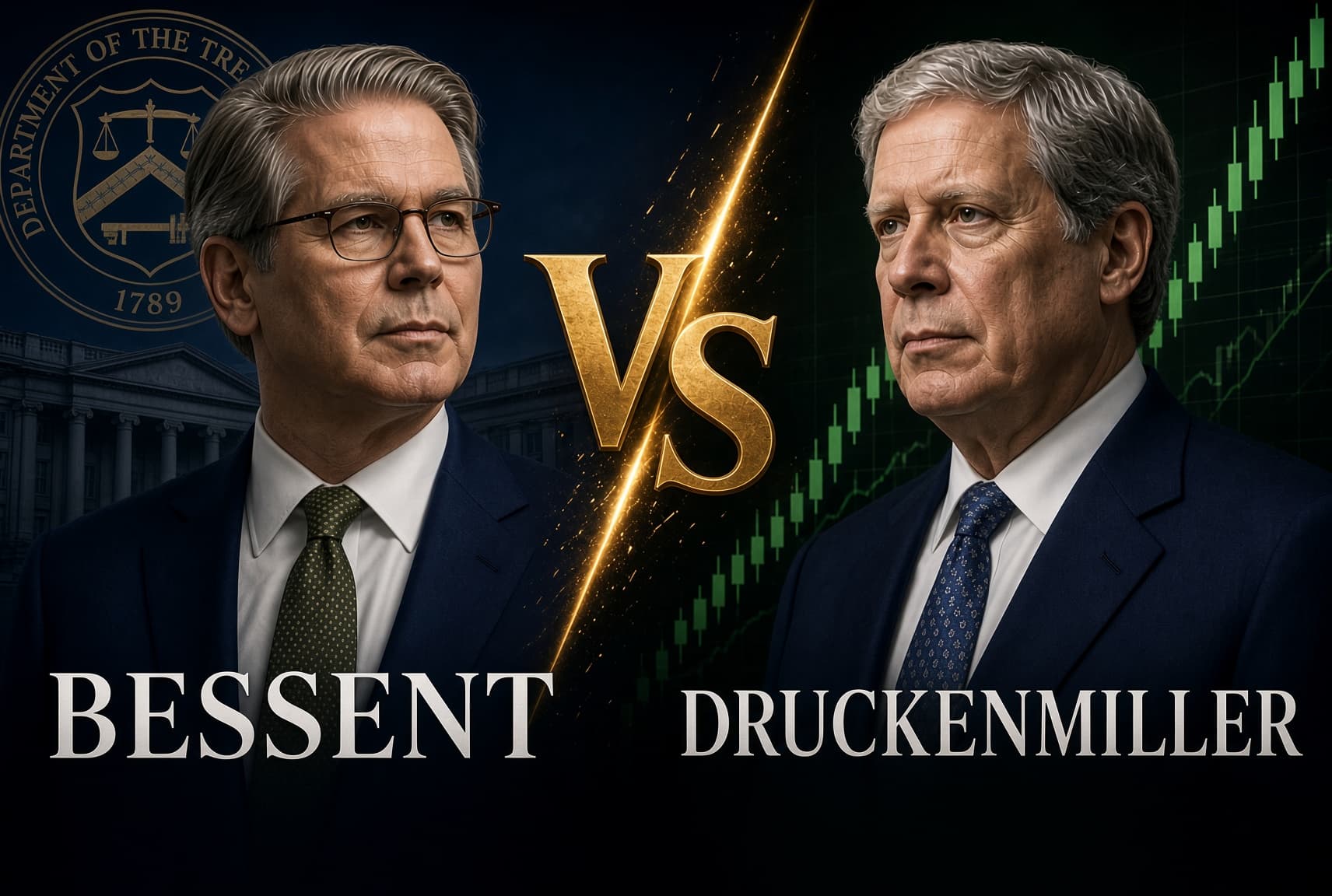
Stanley Druckenmiller’s recent Wall Street Journal essay was widely read as a rebuke of Treasury Secretary Scott Bessent. That is too narrow. The piece is really about the fiscal box the country built over decades: an aging population, permanently large structural deficits, and a political class that would rather manage bond prices than reform spending. Druckenmiller argues that the long-term Treasury yield is the last real disciplinarian left in Washington, that recent buybacks look more like price management than ordinary liquidity work, and that suppressing yields only subsidizes delay. If the long bond has to clear at a higher rate, he says, that is an invoice, not a crisis. The durable fix is the primary deficit, not another official bid.
He is right about what ought to happen. Investors do not get paid for ought.
Stocks already trade at 240 to 250 percent of GDP and are drifting toward 300 (using the old Buffett indicator). Nominal growth is running near 6.5 percent and still rising. On those facts, a ten-year yield above 8 percent is not radical. It is what a market would charge if it were allowed to. Yields are not there because official policy will not tolerate the risk of letting them go. August made the preference clear: currency support, softer refunding language, a buyback framework, larger buybacks, and open talk of using the Treasury’s cash account. That sequence tells you the appetite for a disorderly long-end backup is close to zero.
The new pressure is not only entitlements. It is the AI build-out. Hyperscaler borrowing is already a large and rapidly growing slice of investment-grade supply, competing for the same buyers Treasuries need. A hawkish speech from the Fed chair does not settle the long end when private industry is bidding aggressively for capital. That bid is coming from data centers, chips, and power, not from a sudden jump in inflation expectations alone. Compute is scarce. Scarce compute does not get cheap overnight. The firms with the highest margins buy the most capacity, train the strongest models, and earn the cash to buy still more. That loop lifts nominal GDP and keeps inflation firmer than a deficit-weary Treasury would like.
That is Bessent’s dilemma. He is asked to hold long rates in check while the government runs deficits that no longer look cyclical. Push yields down and Congress hears that the bill can wait. Let them rip and you risk a funding scare, higher interest costs, and political panic. Neither path is free. Once markets decide the Treasury is defending a price, every backup becomes a test of resolve, and the operations have to get larger to survive the test.
When official prices are managed, capital looks for assets that do not need a government bid. Gold remains a reasonable hedge against fiscal denial. It is unlikely to be the fastest asset in this cycle. Artificial intelligence shortens decision time and pulls finance onto programmable rails. Tokenization is already moving from theory to policy in parts of Asia. Payments firms are buying toward the same future. Claims that settle like software do not wait on a quarterly refunding statement.
Conservatives should want the bond market to speak. A yield that tells the truth is not an attack on the country. It is the last adult still willing to send the invoice.
You Might Also Be Interested In

Lalota’s Hypocrisy Leaves NY-1 Without a Candidate Worth Endorsing

Before You Vote: What Every Job on Your Ballot Actually Does

Hochul Says New York Will Join Federal Scholarship Tax Credit Program Starting Jan. 1