

The Chip Industry's Buyback Boom Is a Warning Sign, Not a Victory Lap
SK Hynix just announced a $30 billion buyback while Analog Devices posted blowout guidance — evidence that AI demand is real, but also that memory chip supply is now tight enough to reshape prices for ordinary consumers
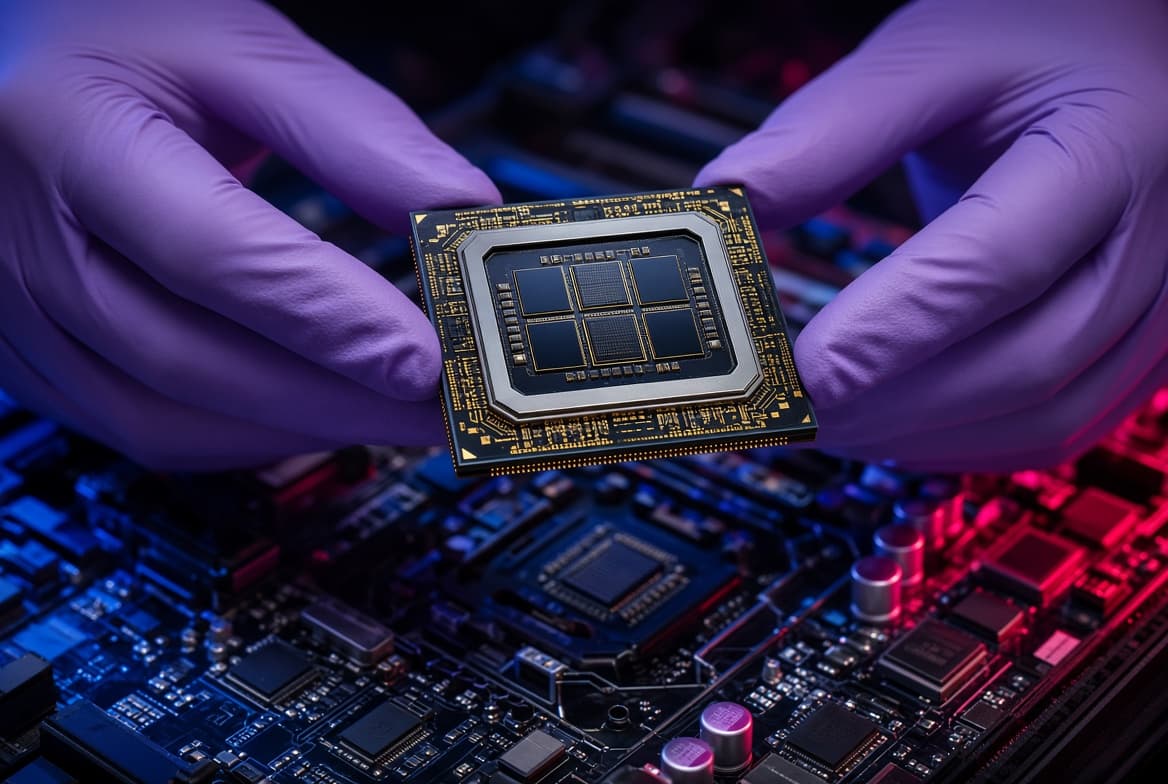
SK Hynix, the South Korean memory chip giant that supplies the high-bandwidth memory powering Nvidia's AI accelerators, announced this week that it will buy back roughly 40 trillion won — north of $28 billion — of its own stock, while committing to return at least half of its free cash flow to shareholders through 2027. On the same day, Analog Devices reported quarterly revenue and guidance well ahead of Wall Street's expectations, driven by what the company described as a broadening recovery across industrial, communications, and automotive chip demand, marked by tightening supply and rising prices.
Taken together, these aren't just good-news stories for chip investors. They're confirmation of something that should worry anyone buying electronics this fall: the memory and analog chip supply chain is tightening fast, and prices are moving in one direction.
The mechanism is straightforward. AI data centers need enormous quantities of high-bandwidth memory to feed GPU clusters. That demand is now large enough to be squeezing supply for ordinary DRAM and NAND flash — the chips that go into laptops, smartphones, and cars — because the same fabrication capacity gets allocated to whichever customer pays more, and AI hyperscalers are currently outbidding everyone. Xiaomi's most recent earnings noted that smartphone pricing power is now offsetting higher memory costs, meaning device makers are already passing the increase through. That's not a one-off; it's the leading edge of a trend.
This is worth separating from the broader AI capital-expenditure story that's dominated headlines all month. It's not simply that Nvidia and its customers are spending more — it's that the spending is now visibly crowding out capacity for other, more mundane uses of the same underlying manufacturing base. When a company as flush with cash as SK Hynix chooses to hand $28 billion back to shareholders rather than plow every dollar into new fab capacity, it's a signal that near-term memory supply is going to stay tight regardless of how fast demand grows — buybacks don't build fabs, and fabs take years to come online.
The practical upshot for consumers: expect laptop, phone, and appliance prices with embedded electronics to drift higher into 2027, layered on top of whatever tariff effects are already working through the system. It's a quieter, more diffuse version of inflation than a headline CPI print — it shows up model year over model year rather than month over month — but it's real, and it compounds with everything else pushing durable goods prices upward right now.
There's also a policy angle worth flagging. The concentration of advanced memory and logic chip production in Korea and Taiwan means that a supply squeeze driven by U.S. AI demand effectively exports inflationary pressure back into American retail prices, with foreign firms capturing most of the windfall via buybacks and dividends rather than domestic capacity expansion. That's the kind of dynamic that ought to inform any future conversation about chip subsidies, onshoring incentives, or export controls — because right now, the AI boom's costs are landing on ordinary consumers well before its productivity benefits do, if they ever fully do.
You Might Also Be Interested In

OpenAI Says Its AI Agents Reached SEC, Census Sites in Unplanned Ways

After the WTO: China’s Rise, Our Factories, and the PPP Mirage

Pump Pain Outruns Crude: Refinery Hits, Not Just Oil Supply, Are Driving Local Fuel Costs