

A Cautionary Tale Of Ticks
South Shore Press Senior Reporter Robert Chartuk recounts his bout with Lyme disease.
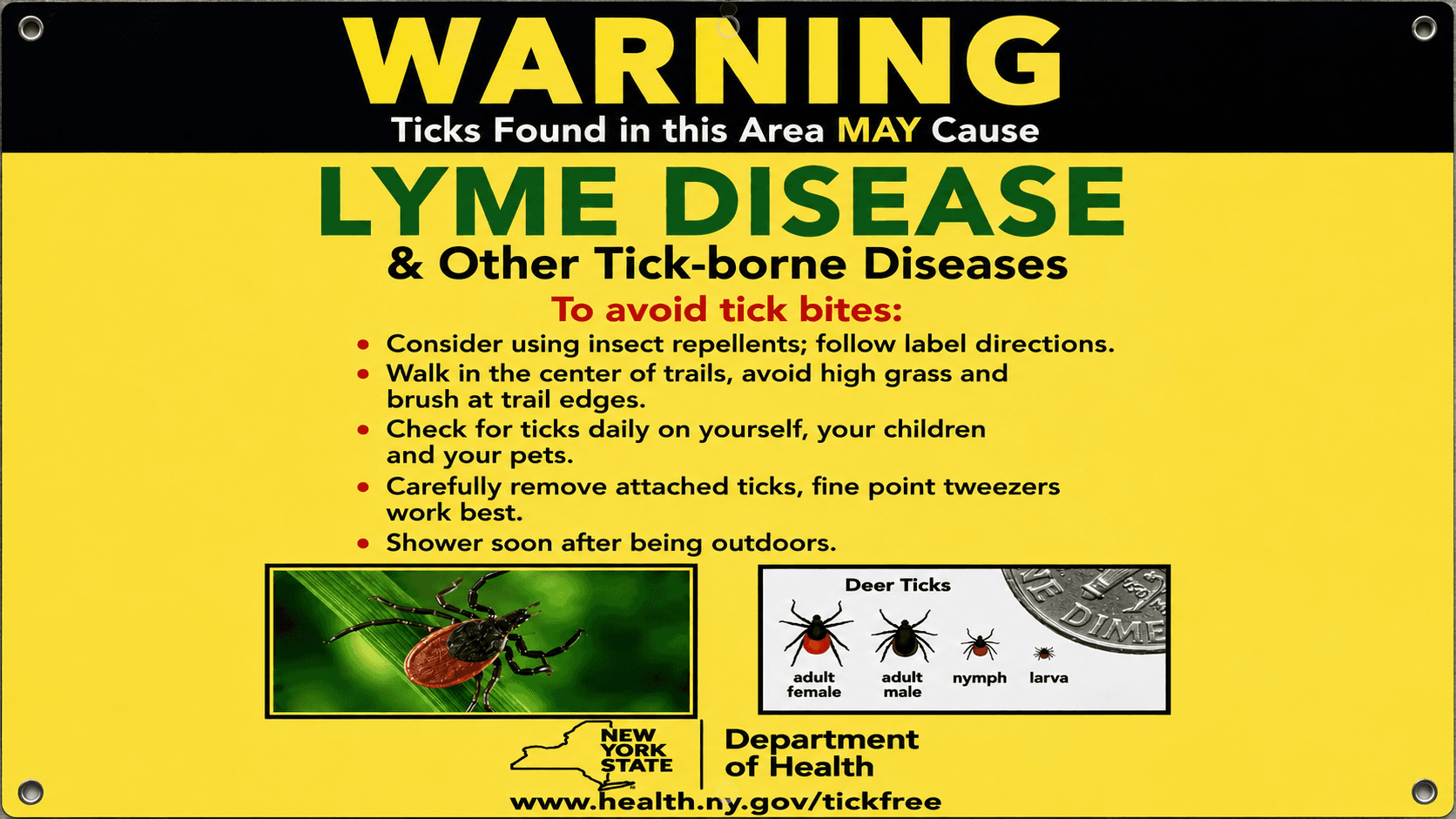
Anyone on Long Island who ventures outdoors these days should be aware of the hazardous little villains lurking in the tall grass and woods: bloodthirsty ticks that can carry any number of diseases. I should know; they got me.
I first noticed a raspberry-red rash emanating from my neck down to my chest. It was not in the classic bullseye form of a Lyme disease tick bite, but that’s what I ended up having. I never saw the critter and could barely detect a small mark where it bit me.
After a few days with an ever-spreading rash, I started to feel crummy—headache, fatigue, joint pain—classic symptoms of Lyme. Pretty soon, it got worse.
After about a week, I was the sickest I’ve ever been in my life. My knees hurt to the point that it was hard to walk, and my lymph nodes swelled. I was dizzy, short of breath and developed a dry hack which, given the advanced state of my headache, generated new levels of pain every time I coughed.
Lying in bed, my fever spiked to 102.3. My head hurt so badly I was immobilized. I couldn’t focus; I thought I was going to die. The doctor suspected Lyme, named for the town in Connecticut where the disease was identified in the 1970s, and put me on the antibiotic doxycycline and the steroid prednisone for the rash. They tested me for COVID twice, which was not my ailment.
I had nothing to do but suffer, occasionally talking to friends to update them on my misery. At one point, I couldn’t type or text because my hands were shaking so badly from the chills. Trying to sleep, I alternated between freezing with three blankets over me and sweating so much that my clothes were soaked. I couldn’t eat, nor could I sleep through the night. My biological clock went haywire.
It is at this point that you consider what your life would be like if such hideous symptoms dragged on. You start to have mortal thoughts. If I did drift off, my fevered dreams were bizarre, to say the least.
When I could bring myself to focus, I learned that the infection comes from Borrelia bacteria spread by blacklegged ticks in the genus Ixodes. The eight-legged little bastards are not insects, but arachnids related to spiders. The bacterium that causes Lyme disease was identified in the early 1980s by scientist Willy Burgdorfer. Some reports say a tick generally needs to remain attached for an extended period to spread the infection, but I didn’t see a tick on me at all, and I doubt one was attached that long without me noticing.
I read about singer-songwriter Kris Kristofferson being leveled by the disease. He had massive, painful spasms all over his back and legs, with his nerve endings causing painful, golf ball-sized contractions. He was not diagnosed right away and did not receive treatment at first. During an eight-month period, he was in so much pain he could barely function.
Thankfully, there were some Lyme symptoms that I dodged: facial palsy, arthritis, heart palpitations, irregular heartbeat, inflammation of the brain and spinal cord, numbness and nerve pain. Unlike Kristofferson, I was diagnosed early, and after a few days of treatment, the symptoms began to subside.
For every hour, every day, that I felt better, I was elated just to be alive and well. I now appreciate the little things in life and more easily let go of my bigger worries. It took a few days for my blood test results to come in, and I received another surprise: In addition to Lyme disease, I also had babesiosis, another illness caused by ticks. In this case, Ixodes scapularis, commonly known as the blacklegged or deer tick, had gifted me a parasite that often doesn’t cause symptoms. According to the doctor, I could have been infected at any time in the past, and I’ve certainly had my run-ins with ticks.
One time after visiting Shadmoor State Park in Montauk, I had dozens of bites from tick nymphs all over my lower extremities, some in really personal places, that I had thought were chiggers. These were the itchiest little red bumps you could imagine, and they lasted almost a month.
While in my feverish state, a friend planted a disturbing thought in my head: The now-defunct infectious disease laboratory at Plum Island, just off Long Island’s North Fork, harbored all kinds of nasty bugs.
Could this have been the original source of my tick diseases?
You never know.
You Might Also Be Interested In

Democrat Candidates Toe Far-Left Line

Historic Manor of St. George To Host March For Liberty

Democrat Chief’s Deals Under Investigation