

Feds Hunting for German Spy Found a 12-Year-Old Radio Genius Instead
Local artist recalls her father, Francis “Frank” Ryder, whose remarkable talent for radio led federal agents to his Brooklyn home during World War I before he went on to found the Suffolk County Radio Club.
Federal agents arrived at a Brooklyn brownstone during World War I believing they were closing in on a German spy.
Powerful radio transmissions had been detected coming from a home just across the street from the Brooklyn Navy Yard, one of the nation’s most strategically important military facilities. At a time when fears of enemy espionage were running high, authorities suspected German agents were using the radio to gather intelligence on naval operations.
Instead, they found a 12-year-old boy.
“The federal government came to the house to investigate him because they thought he was a German spy,” recalled acclaimed Long Island artist Elaine Ryder-Thompson. “They couldn’t believe this child had built a sophisticated radio station that was contacting places all over the world.”
That boy was Francis “Frank” Ryder, who would later become one of Long Island’s amateur radio pioneers and the founding force behind the Suffolk County Radio Club.
According to his daughter, Frank Ryder built his first radio station in 1917 while living with his family at 38 Claremont Ave., only a half-block from the Brooklyn Navy Yard. Although only 12 years old, he successfully passed the communications examination required to receive an amateur radio license—an extraordinary accomplishment for someone his age.
His original call sign was simply 2DQ, issued before the federal government began requiring the “W” prefix for American amateur stations. It later became W2DQ, one of the earliest call signs issued in the United States.
“He built all of his own equipment,” Ryder-Thompson said. “He was what they called a radio ham.”
The Ryder family eventually left Brooklyn, living briefly in Springfield Gardens before moving to Holbrook during the brutal winter of 1947. What was intended to be a temporary stop became an unforgettable experience when a blizzard stranded the family in a summer bungalow without running water.
“We had a pump in the kitchen and an outhouse,” Ryder-Thompson recalled. “We had to eat snow.”
A year later, the family purchased a historic 15-room home in Sayville that had once served as the village’s first schoolhouse. In the attic, Frank Ryder built another amateur radio station, continuing the work that had begun in Brooklyn decades earlier.
The house also held a remarkable discovery—an original 1858 map of Suffolk County that had once hung in the schoolhouse. The oversized map remains in the Ryder family today.
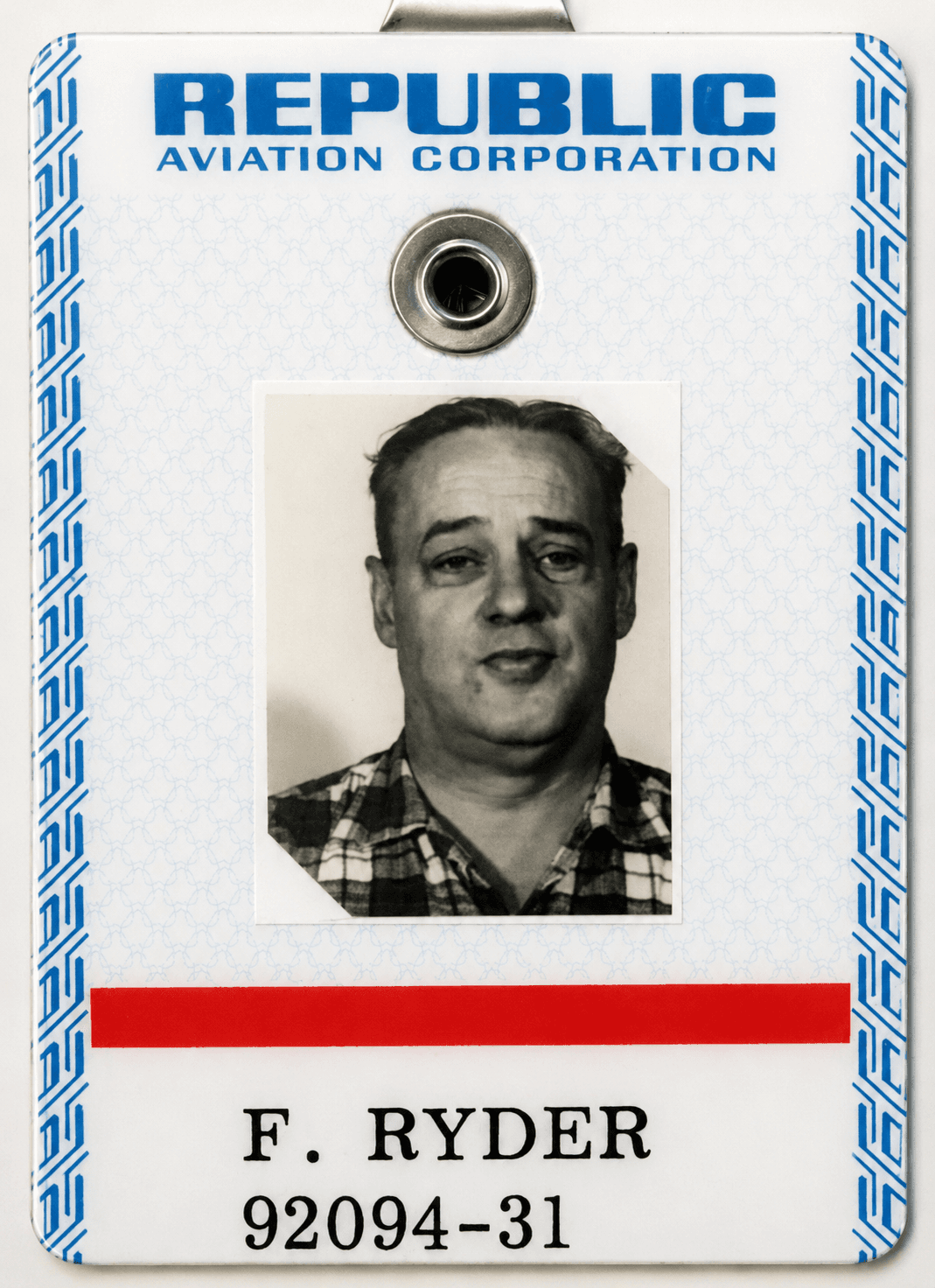
Frank Ryder later attended Brooklyn Polytechnic and worked in aviation at Republic Aviation in Farmingdale and at what would eventually become Long Island MacArthur Airport. But amateur radio remained his lifelong passion.
His daughter inherited that same fascination.
At age 12, Elaine built a crystal radio set of her own, winning first prize at her Sayville junior high school’s science fair.
Years after her father’s death, she unexpectedly rediscovered just how much he was still remembered.
During a public event marking the solar eclipse in Shirley, she learned members of the Suffolk County Radio Club—an organization her father had founded—were providing communications support. Carrying copies of his original QSL cards, she introduced herself.
“I told them I was the daughter of W2DQ,” she said. “They all fell on the floor.”
The club members immediately recognized the legendary call sign.
She shared copies of her father’s early radio cards and operating records, documenting a career that stretched back to amateur radio’s earliest days. She also learned that at one point the Town of Islip had used W2DQ as an emergency communications call sign when conventional systems were unavailable.
Today, Ryder-Thompson is working with members of the Suffolk County Radio Club on a project commemorating the Big Duck’s upcoming anniversary, continuing a family connection that began more than a century ago.
Many of her father’s personal possessions have been lost. After her parents died, the old Sayville home was destroyed in an arson fire, taking with it family keepsakes that had survived for decades.
But one story has never faded.
When federal agents arrived at a Brooklyn home searching for a German spy, they discovered instead a curious 12-year-old boy whose passion for radio would help shape amateur communications on Long Island for generations to come.
You Might Also Be Interested In

A Bank Customer’s Crisis Sparked Decades of Service to Brookhaven Women

Suffolk Sheriff Launches Recruitment Drive for Next Exam

Riverhead E-Bike Law Takes Effect With Fines, Possible Jail Time