
SSP EXCLUSIVE: Victims’ Families Seek Voice in Stony Brook Parole Debate
Long Island victims’ group questions college mascot’s appearance alongside advocates seeking expanded parole opportunities for aging prisoners, including some convicted of murder and other violent crimes.
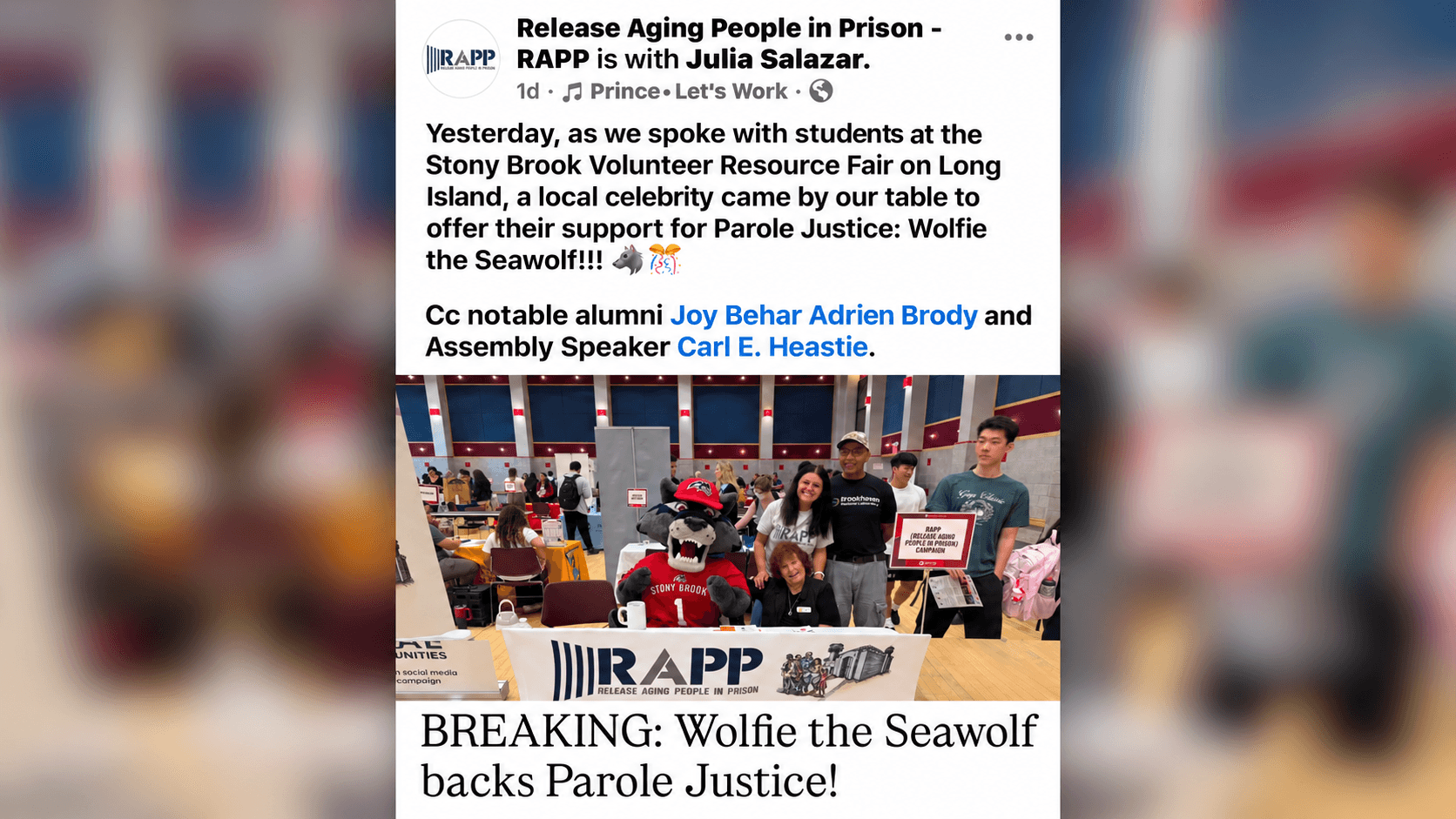
Parents and Other Survivors of Murdered Victims is calling on Stony Brook University to explain why Wolfie, its official mascot, appeared alongside advocates for changes to New York’s parole laws, saying victims’ families deserve greater representation in discussions about releasing people convicted of violent crimes.
The Long Island-based organization, known as POMV, raised questions about the Seawolf mascot appearing with advocates from Release Aging People in Prison, or RAPP, and New York State Senator Julia Salazar.
RAPP advocates for expanded parole opportunities for aging incarcerated people, including some serving sentences for murder and other serious violent crimes.
POMV particularly questions proposals that would make age a factor in determining parole eligibility, arguing that growing older in prison does not diminish the seriousness of the crime or the loss suffered by victims’ families.
“Age does not erase the crime, and it certainly does not erase the victim,” POMV Director Barbara Connelly said. “Our loved ones don’t get to grow older.”
POMV said it does not oppose debate over criminal justice reform but believes victims and surviving families must receive comparable opportunities to participate.
The group is asking who authorized Wolfie’s participation, whether university officials knew the mascot would appear with RAPP advocates and whether the appearance represented university support for the organization or its policy goals.
As of publication, the university had not responded to a request for comment. The South Shore Press asked for a response to our reporting three times via email and direct phone calls.
POMV is also asking whether Stony Brook would provide similar visibility to organizations representing crime victims and their families.
The group directed additional concerns toward Salazar, who chairs the state Senate Committee on Crime Victims, Crime and Correction, calling on her committee to give victims and survivors meaningful opportunities to testify on legislation involving parole, sentencing and release policies.
“Crime victims can speak,” Connelly said. “We have voices, experiences and stories that deserve to be heard.”
POMV said parole decisions should consider the seriousness of an offense, accountability, public safety and victims’ voices, rather than focusing primarily on an incarcerated person’s age.
The organization, which has supported homicide survivors since 1981, said criminal justice reform should not come at the expense of remembering those whose lives were taken.
You Might Also Be Interested In

Hammering History at the Manor of St. George

Suffolk Leads State in High-Paid Government Workers

Industrial Fishing Fleets Threaten Ocean Food Chain