Jeffries Pledges to Reverse Health and Food Aid Cuts in First 100 Days
The president said he would veto what the new majority sends him, then bargain from there
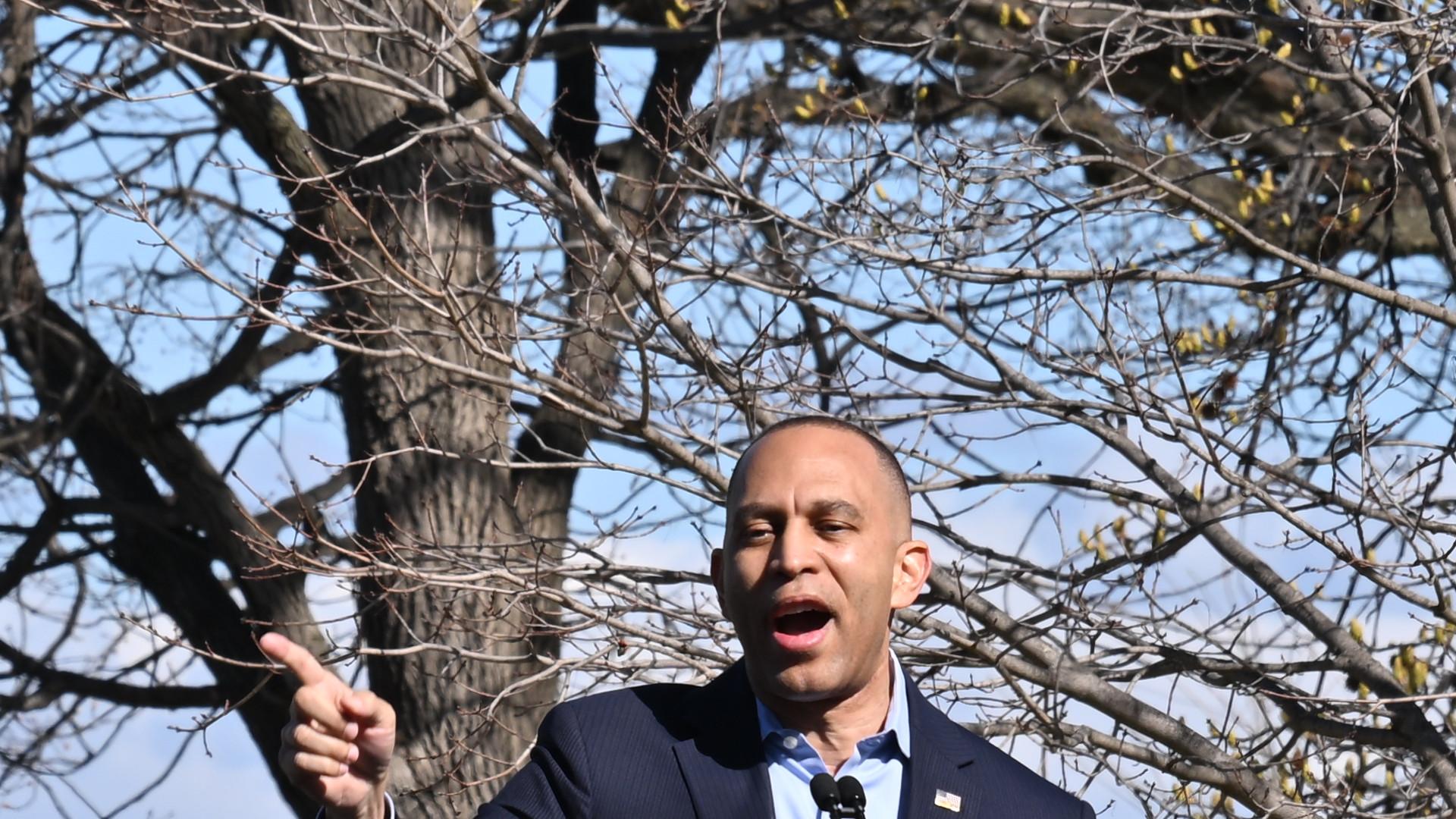
The day after Democrats won both chambers, Hakeem Jeffries published a plan for the House's first 100 days, starting with a rollback of last year's health and food aid cuts and an end to the president's tariffs and the war in Iran.
Jeffries made the case in a Nov. 4 letter to colleagues announcing his candidacy for speaker. "During the first 100 days, House Democrats must act to reverse the Medicaid cuts, restore SNAP funding, extend the Affordable Care Act tax credits, eradicate the Trump tariffs and stop the reckless war of choice in Iran," the New York Democrat wrote. He grouped the broader work under what he called affordability, accountability and American values, and said the majority "will try to find bipartisan common ground whenever and wherever possible."
The caucus had already formed working groups on housing, health care, groceries and goods, gas and utilities, and caregiving. "Donald Trump and House Republicans promised to lower costs on Day One. They failed," Jeffries wrote. That afternoon he appeared at a press conference with House Democratic leaders. Later in the month he again pledged to reverse the Medicaid cuts and extend the tax credits, and he restated his call to stop the tariffs and end the war.
House Democrats have since nominated him as speaker-designate. If the full House elects him when the new Congress convenes, he would be the first Black speaker. Democrats will hold at least 258 seats in the House and 56 in the Senate, a Senate majority short of the 60 votes usually needed to advance ordinary legislation.
The health and food aid items on his list would unwind parts of the tax and spending law President Donald Trump signed on July 4, 2025. That law imposed work requirements on able-bodied adults in Medicaid. Enhanced Affordable Care Act tax credits, which lowered marketplace premiums, expired at the end of 2025. The House later passed a three-year extension of those credits, which has not become law. Jeffries has described the Medicaid reductions as the largest cut in American history.
Reps. Andrew Garbarino and Nick LaLota, the Long Island Republicans who represent Suffolk County, both voted for that law and both won new terms in this month's elections. LaLota wrote after the election that Democrats "made promises on affordability" and that "now it's time to deliver, not defund Homeland Security or pursue partisan investigations and frivolous impeachments." In a separate post, he said Democrats would have "some bargaining leverage with their large majorities" in the next Congress, but "shouldn't overreach or shut down the government to jam through a partisan agenda." He has not addressed the specific bills on Jeffries' 100-day list. Garbarino had not commented publicly on the plan as of Thursday.
Jeffries also pledged to "root out corrupt price gouging, clean up the mess at the Supreme Court and ban Members of Congress from trading stocks," and wrote that "the days of the House functioning like a wholly owned subsidiary of the Trump Administration are over." Those accountability fights can start in the House. The health, food aid, and tariff bills still need the Senate, and they need a signature the president has already said he may withhold.
Last week, Trump told reporters, "They're going to send things my way, and I'm going to veto them. And then they're going to send more things, and I'm going to veto them." He said that after a month or so he would tell Democrats he would veto "unless you want to do this and this and this." He also said that "because of the power of the veto, there's a real possibility that we'll get a lot of great things done, especially on healthcare," and that the result "can be a combination of what we all want."
The new Congress convenes on Jan. 3, the first day the new House can take up the bills. The measures would still have to pass the Senate and be signed by the president, and the tax and spending law Jeffries wants reversed remains in force.
You Might Also Be Interested In

A Ban on Chinese Cars From U.S. Roads Awaits Votes in Both Chambers
Trump Demands Probe of Growth Figures Issued Before Midterms
Bishops Back Sainthood Inquiry for Maria Middleton