Trump Demands Probe of Growth Figures Issued Before Midterms
A scheduled update lifted the third-quarter estimate after voters had already gone to the polls
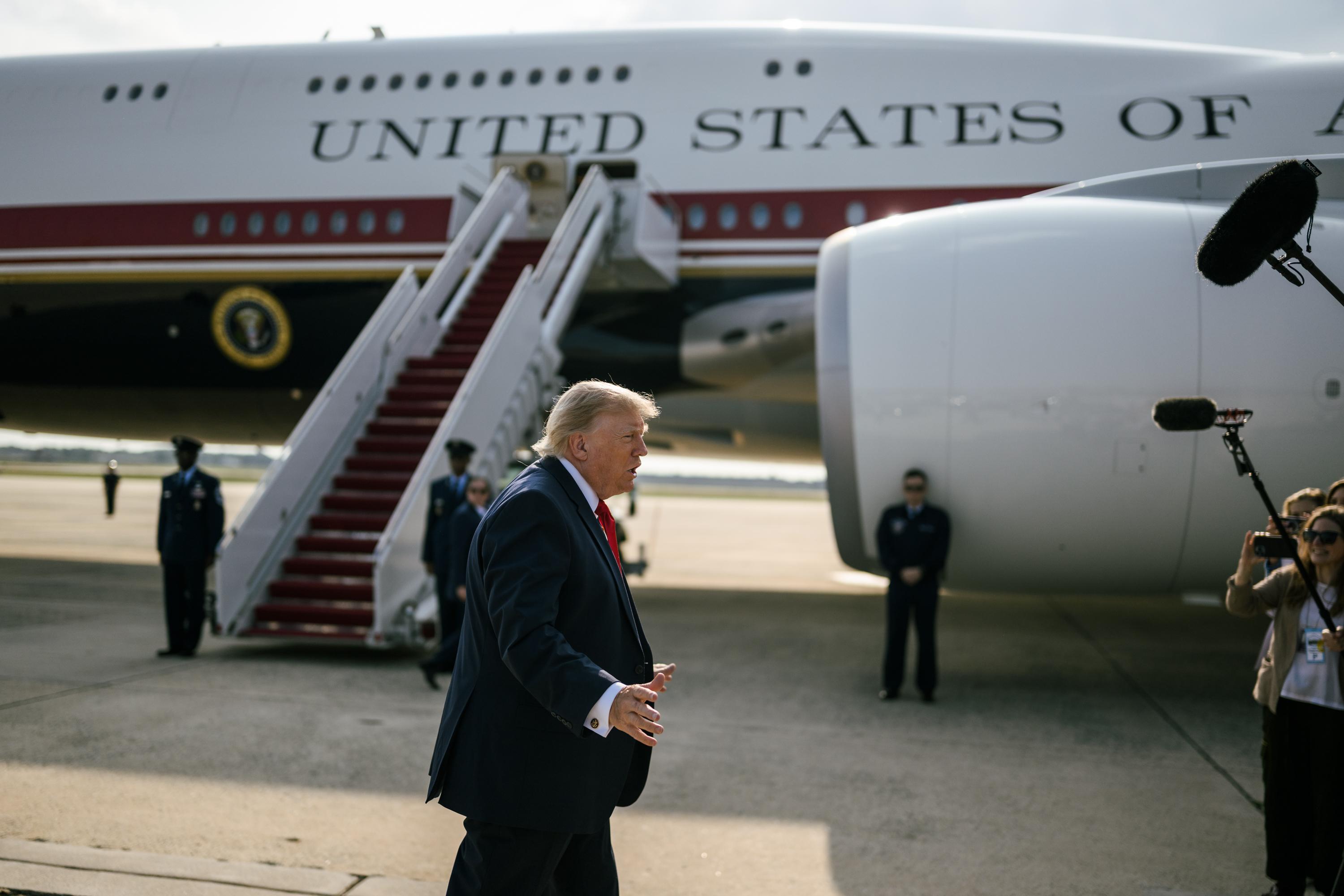
On Thanksgiving, President Donald Trump demanded an inquiry into third-quarter growth numbers issued ahead of this month's midterms, calling the opening estimate fake and alleging it was purposely lowered to influence the vote.
He made the charge in two posts on Truth Social. In the first, he said "the REAL Numbers on the Economy, published before the Election, were FAKE," and that third-quarter growth "has now been corrected to be 4.3%, instead of 3.4%." He asked, "Why wasn't the correct number issued before the Election? I am asking for an immediate investigation of this situation. This is not a small error, this is a massive, and purposeful, error." He offered no evidence of a purposeful error. In a later greeting he referred to "fake Economic Numbers" issued "just prior to the Election," called the revision a "RECORD SETTING ERROR," and said the figures were corrected "three weeks late."
The Bureau of Economic Analysis, an agency of the Commerce Department, had issued its advance estimate on Oct. 29, five days before the election, at 3.4 percent at an annual rate. The bureau then raised that reading to 4.3 percent, nearly a full point, on the date it had already listed in the October release. The span from that release to the midweek update followed the bureau's ordinary month-apart cycle for those two readings. The bureau issues three estimates for each quarter as later figures on inventories, trade, and household spending come in. A first revision of more than a point during the April-June quarter of 2020 was larger than this week's move.
The bureau said the latest upgrade came mainly from stronger business investment, led by software, and from higher household spending on goods. A May study by Vipin Arora, who directs the Bureau of Economic Analysis, and co-author Rebecca Pocase looked at 2000 through 2024. It found that the third estimate of real growth, published about 90 days after a quarter ended, differed from the opening figure by an average of about half a point. The midweek report was the second estimate in that cycle. The bureau's own comparison of vintages, covering 1999 through 2025, finds a similar average change between the opening estimate and the second reading.
Republicans lost their majorities in the Nov. 3 elections. Democrats took control of both the House and the Senate and won several governorships, after Republicans had held both chambers heading into the vote. Reps. Andrew Garbarino and Nick LaLota had not commented publicly on the president's demand as of Thursday, and the Commerce Department bureau that publishes the growth figures had issued no public response to the allegation.
Jim Baird, who leads investments at Plante Moran Financial Advisors, wrote on Wednesday that the report "reinforces an increasingly familiar tension: the economy is performing quite well, but its resilience also gives the Fed an even stronger case for further rate hikes." Traders on Thursday afternoon were pricing a nearly certain quarter-point increase at the Federal Reserve's meeting on Dec. 8 and 9.
The president has challenged federal labor data before, including on Aug. 1, 2025, when a jobs report showed about 73,000 positions added in July and a combined downward revision of about 258,000 for May and June. That day, he announced that he had directed his staff to fire Erika McEntarfer, who led the Bureau of Labor Statistics, and accused the bureau of having "faked" the figures.
The bureau is scheduled to publish its next reading of July-through-September growth on Dec. 23. That third estimate follows the same posted cycle as this week's second estimate, a timetable the bureau had made public before Election Day.
You Might Also Be Interested In

A Ban on Chinese Cars From U.S. Roads Awaits Votes in Both Chambers
Jeffries Pledges to Reverse Health and Food Aid Cuts in First 100 Days
Bishops Back Sainthood Inquiry for Maria Middleton