

Other than that USS Lincoln, how was the war?
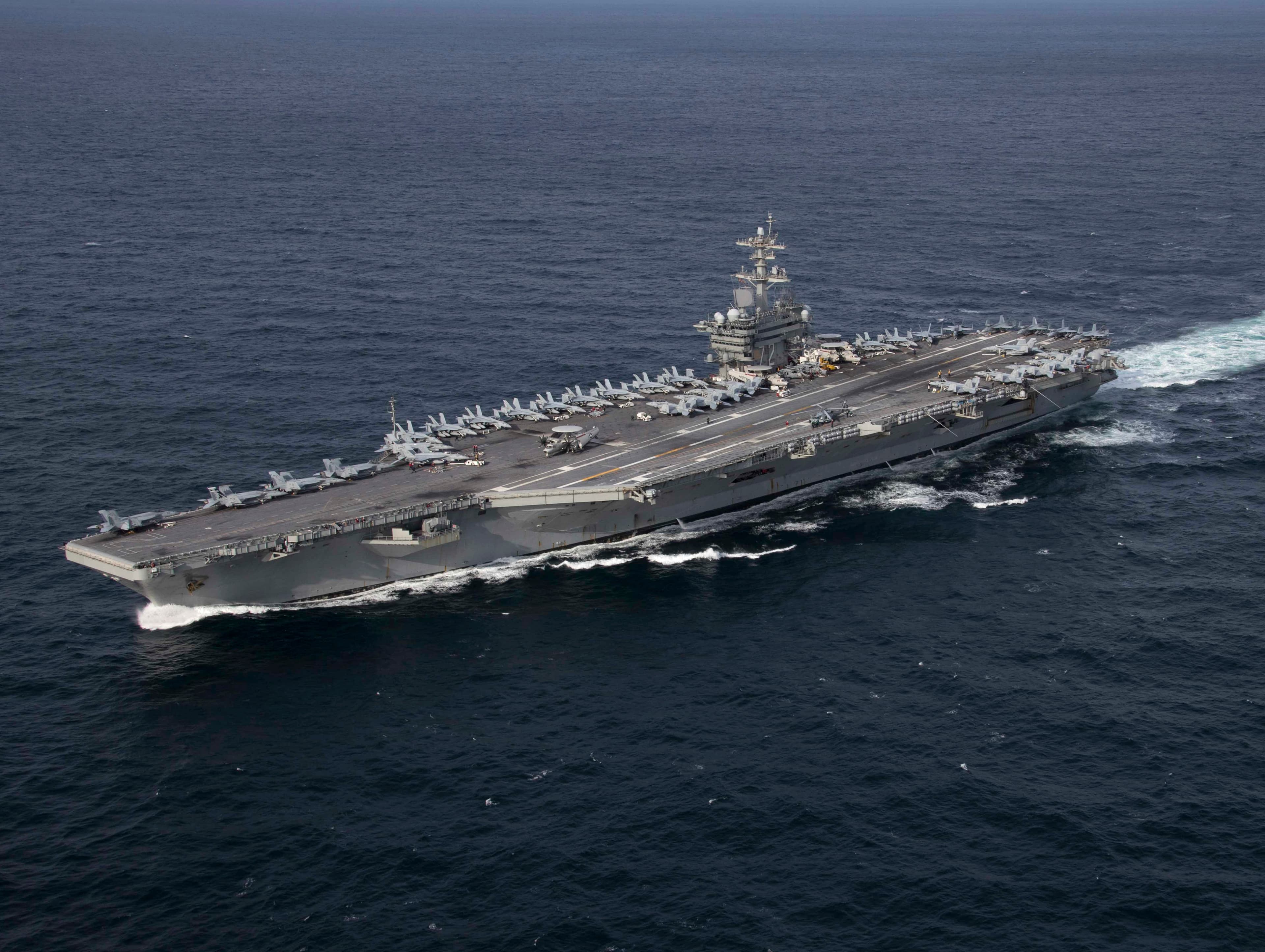
[WASHINGTON] The crew of USS Abraham Lincoln heads home upon the arrival and relief by USS George Washington, bringing an bittersweet ending to the “Shall Not Perish” carrier’s long and successful deployment to the Iranian theater.
Despite the heroic efforts of its crew, which saw it throw tremendous lead down range, the leftwing media has spun up crew and family malcontent into an intolerable public crisis.
This crisis led directly to Acting Navy Secretary Hung Cao and Vice Admiral Joseph F. Chahill, commander of Naval Surface Force, Pacific Fleet, meeting with families in San Diego, and then Admiral C. Bradley Cooper, the commander of U.S. Central Command, to visit Lincoln himself.
The complaints from crewmembers and families are nothing extraordinary for a long Navy deployment, but what makes it extraordinary is the logistics challenge resupplying ships in a contested battlespace–and the mainstream media’s prediliction to hype any negative news it can connect to President Donald J. Trump.
Lincoln, along with destroyers USS Michael Murphy, USS Frank E. Petersen Jr., and USS Spruance, left San Diego Nov. 21 for routine operations in the Pacific Ocean. The carrier strike group made a one-day port call at Apra Harbor, Guam, Dec. 11, which would be their last port call during this tour of duty–now, more than 250 days ago.
The Lincoln Carrier Strike Group was diverted from its prearranged duties to the Iranian theater of operations Jan. 20. Operation Epic Fury began Feb. 28.
Foremost, there is the issue of Naval Support Activity Bahrain, headquarters of 5th Fleet, and the fleet’s central logistics hub with warehouses, deep draft piers and full port facilities. While the Army moved its three bases, with their personnel, assets and Army Prepositioned Stock, out of nearby Qatar five years ago, to step away from the Iranian threat–the Navy did not budge.
In fact, in January as two dozen warships were converging for Operation Epic Fury, 5th Fleet leadership reaffirmed its commitment to keeping its headquarters and logistics as the small island.
However, once Epic Fury opened up, the Islamic Republic of Iran immediately targeted NAS Bahrain, Feb. 28 through March 6, with significant damage to shipyard and port facilities, in addition to administrative buildings and intelligence gathering centers.
Given that NAS Baharain is smack-dab in the middle of the battlespace, it is a security nightmare to have warships pull in to resupply, and just as bad for the vessels of the Military Sealift Command tasked with delivering to the ships underway in the region. Lincoln has had two replenishments at sea, one by USNS John Lewis in July and by USNS Cesar Chavez in August. These replenishments involved ships steaming side by side as pallets were sent to the receiving ship via a cable rope connecting both vessels. Under normal circumstances, the risk of accidents or even a collision is extremely high–now, imagine if the Iranians sent a swarm of drones to complicate things.
Consider, too, that Lincoln serves more than 18,000 meals a day, and the fresh fruits, vegetables, and milk have been distant memories for months.
Having to yank Washington off its own Western Pacific operations, leaving no carrier there, exposes the problems of only having 10 working carriers, with five offline.
Nothing should take anything away from the crews of the Lincoln and her strike group, who contributed more than 10,000 sorties and made innovative use of the F-35 to track and intercept incoming drones. Its operations were the very cornerstone of the blockade of the Strait of Hormuz, and critical to that mission’s geopolitical success.
You Might Also Be Interested In

DoorDash Agrees to Pay $131.5 Million Over Underpaid NYC Delivery Workers

OpenAI Says Its AI Agents Reached SEC, Census Sites in Unplanned Ways

UN Official Says U.S. Drug-Boat Strikes May Be Crimes Against Humanity