

Puberty Blocker Study Sounds Alarm on Youth Treatment
A decade-long federal study involving children as young as eight documented striking levels of depression and suicidal behavior.
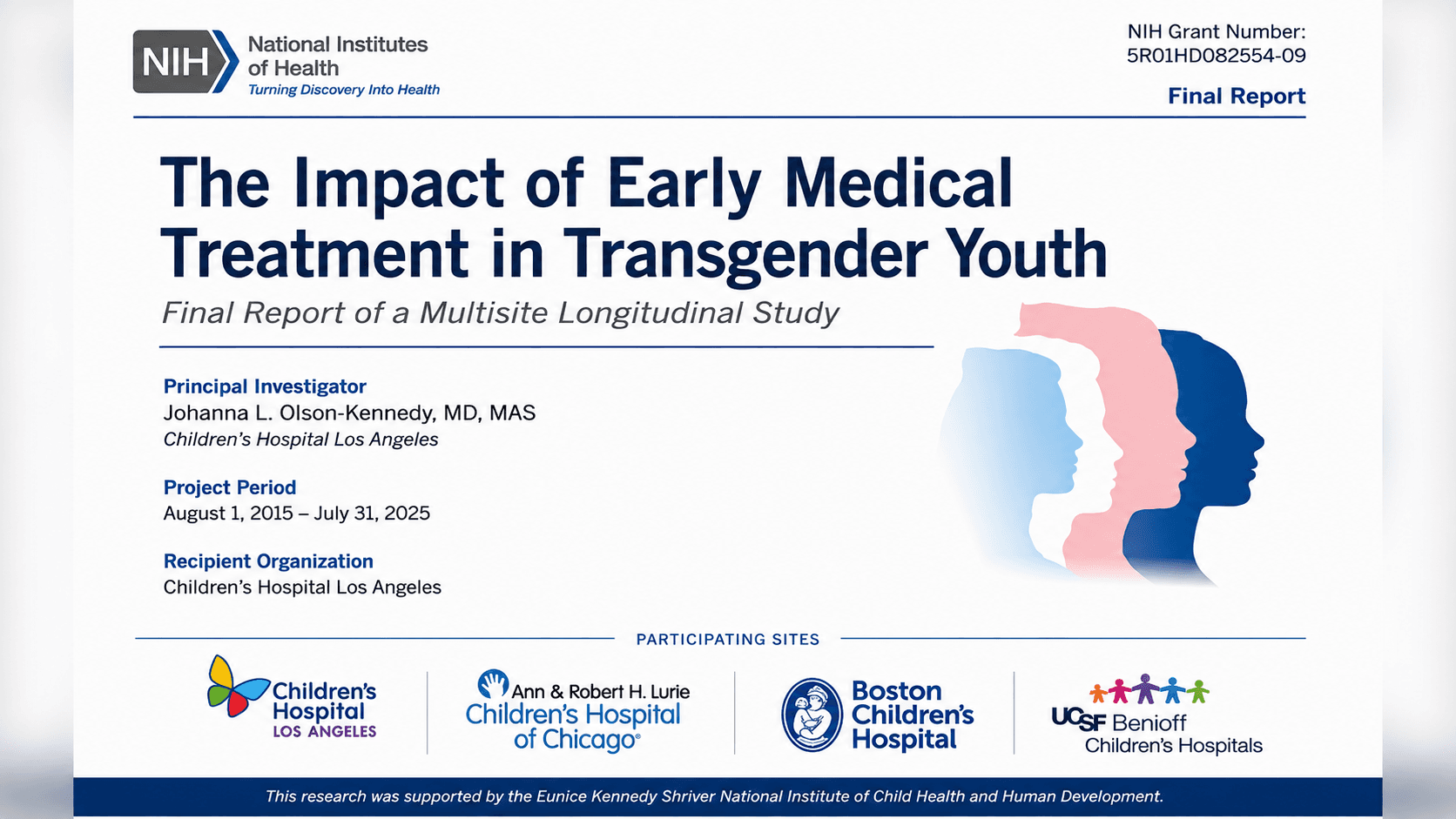
A federally funded study of transgender and nonbinary youth is raising serious questions about puberty blockers and gender-affirming hormones after documenting high levels of depression, suicidal thoughts and previous suicide attempts among participants.
The final report was prepared by a research team led by Dr. Johanna Olson-Kennedy at Children’s Hospital Los Angeles for a National Institutes of Health-funded project titled “The Impact of Early Medical Treatment in Transgender Youth.” The decade-long research involved four major children’s hospitals.
Among youth entering the puberty-blocker cohort, roughly one-quarter had clinically concerning depression and anxiety scores, about one-quarter reported having considered suicide and 8 percent reported a previous suicide attempt. Among those beginning gender-affirming hormones, approximately two-thirds reported prior suicidal thoughts and about one-quarter said they had attempted suicide.
Of particular concern is the age at which medical intervention was studied. Children as young as eight were eligible for the puberty-blocker cohort, with researchers examining treatment effects involving bone health, growth, body composition and cardiovascular risk factors.
The study comes as Health and Human Services Secretary Robert F. Kennedy Jr. and the Trump administration have moved aggressively to restrict the treatments for minors. Earlier this month, HHS finalized a rule ending federal Medicaid and CHIP funding for puberty blockers, cross-sex hormones and certain surgical procedures for children and youth.
“These interventions carry serious risks and can cause irreversible harm,” Kennedy said, arguing they fail to meet the evidentiary standard children deserve. HHS cited potential consequences including infertility, impaired sexual function and diminished bone density.
The federal study also specifically sought additional “youth of color” and participants assigned male at birth because those groups were underrepresented, a recruitment goal likely to draw further scrutiny.
With some participants beginning treatment at such young ages, the findings are likely to intensify debate over the long-term consequences of medically altering puberty in minors.
You Might Also Be Interested In
Lalota’s Hypocrisy Leaves NY-1 Without a Candidate Worth Endorsing
Before You Vote: What Every Job on Your Ballot Actually Does

Hochul Says New York Will Join Federal Scholarship Tax Credit Program Starting Jan. 1