Giuliani Earned the Medal in the Years His Critics Skip
The Medal of Freedom honors the mayor who led New York through September 11 and oversaw a steep drop in crime
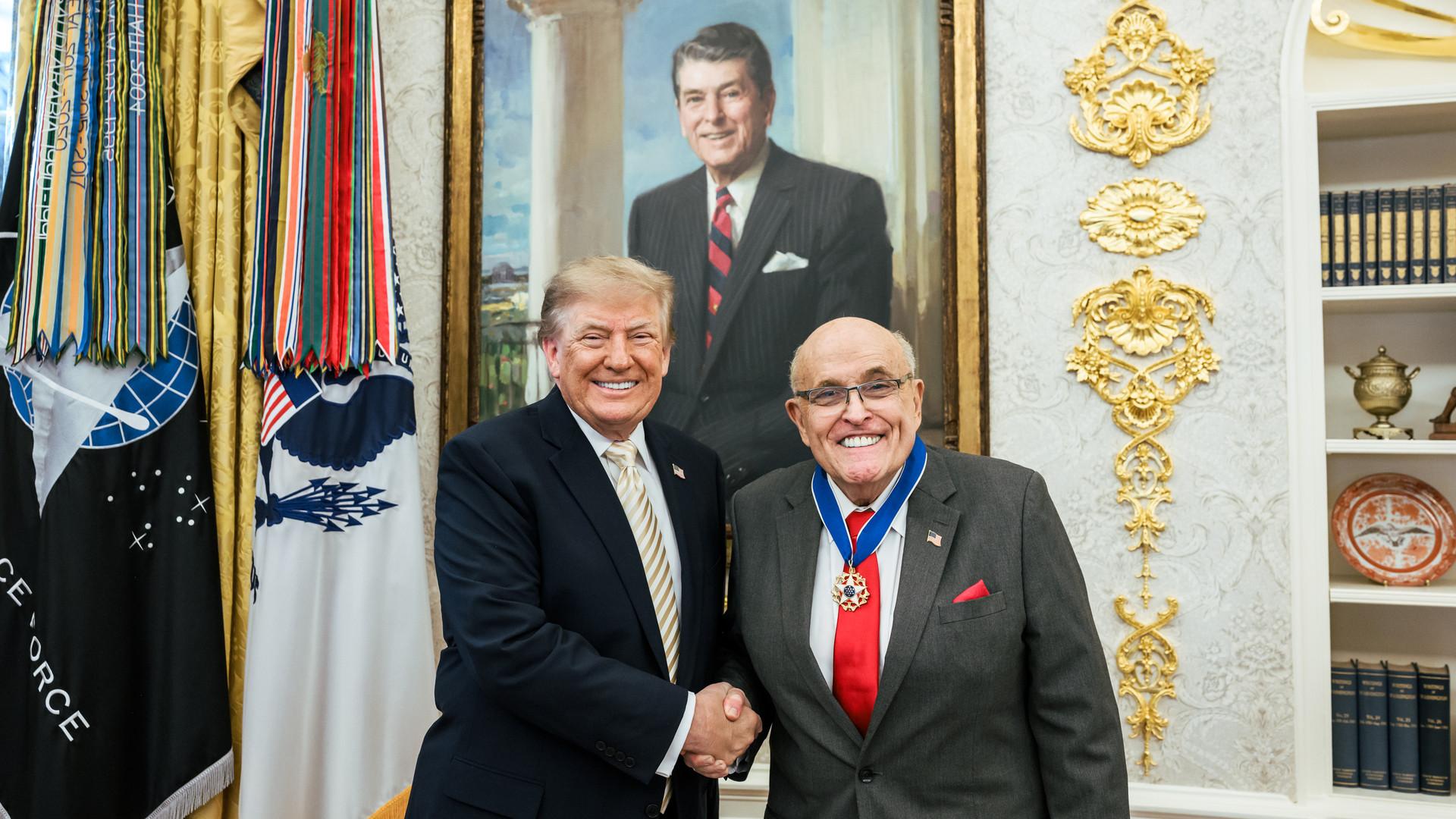
President Trump awarded Rudy Giuliani the nation's highest civilian honor, the Medal of Freedom, inside the White House on Tuesday. The old argument about the man resumed as if nothing in his life had happened before 2020.
Olivia Wales, a White House spokeswoman, said the honor recognized a federal prosecutor who "took down mob bosses and led a relentless war on crime," and a mayor who, after the September 11 attacks, "displayed strong American leadership in the face of evil." Reporters were kept out of the private ceremony.
Public Citizen titled its statement "disgraceful," and its co-president, Lisa Gilbert, said Giuliani's "main claim to fame in the last decade" was his attempt to reverse the 2020 result, and accused Trump of sullying the medal by honoring "this disgraceful man." Rep. Jerry Nadler wrote that Giuliani is "a liar, a criminal, and clearly unfit for one of America’s highest honors."
Two courts disbarred him in 2024, citing false statements he made about the 2020 election, and a jury ordered him to pay $148 million for defaming two Georgia election workers, a judgment he later settled. The criminal cases that followed him out of that fight ended in dismissals, Georgia's racketeering case last year and Arizona's fake electors case after that. He denied wrongdoing in both, though Arizona's attorney general has said she will return to a grand jury. The pardon Trump issued last year reached federal offenses only. All of that is on the record, and none of it requires a defense from anyone who admires what he built before it.
The medal's stated standard is "exemplary contributions to the prosperity, values, or security of the United States," and on that measure the earlier record is not close. Appointed U.S. attorney by Ronald Reagan, Giuliani indicted the heads of the Five Families in a single racketeering case that put eight men in prison, most of them for 100 years. The investigation behind it leaned on a Suffolk garbage hauler who agreed to wear a wire and on a wiretap in Nissequogue, the kind of Long Island ground game that gets forgotten when the story is told as a Manhattan triumph.
The city he inherited as mayor in 1994 had come to treat violence as weather. Murders had peaked above 2,200 in 1990, so the decline had begun before he took office. As mayor he appointed William Bratton police commissioner, and the NYPD put CompStat in place, using current crime data and mapping to hold precinct commanders accountable. His administration also enforced quality-of-life rules, from graffiti to turnstile jumping. Killings fell from nearly 2,000 in 1993 to about 650 in 2001, on his watch. Nearly 700,000 people left the welfare rolls, and overall crime fell by about two-thirds. Plenty of officials have promised that a big American city can be made safe again, and he is the one who delivered it.
September 11 turned a successful mayor into a national figure, and the words he chose that day still carry. Asked about casualties, he warned that the toll would be "more than any of us can bear," and he told a stunned city that "Tomorrow New York is going to be here" and that it would be "stronger than we were before." He went to nearly 200 funerals and memorial services for firefighters, police officers and other rescuers in the months after the attacks. Queen Elizabeth II made him an honorary knight, and the editors of a national newsmagazine named him its 2001 Person of the Year. Nadler's complaint about what Giuliani told the public regarding the air at Ground Zero is the weightiest part of his statement, and the dispute over respirators and cleanup in the first weeks after the attacks has been argued for years.
In a statement released after the ceremony, Giuliani said he shared the credit with everyone "who worked with me, disagreed with me, and loved me." The 2020 episode will stay attached to his name in court records and disbarment orders. The honor answers to the crime decline and to the morning he told a ruined city that New York would still be here the next day. Those are the years the White House cited, and they are the years New Yorkers from the five boroughs to Suffolk still live with.
You Might Also Be Interested In
Mamdani's Sanctuary City Runs on Two Sets of Rules
Sotomayor Weighs Term Limits After 17 Years on the Bench
Miss Israel's Peace Cape Became a Political Target