

Ring of Deception
Championship rings are supposed to celebrate achievement, reward loyalty and give players and staff a lasting reminder of a special season.
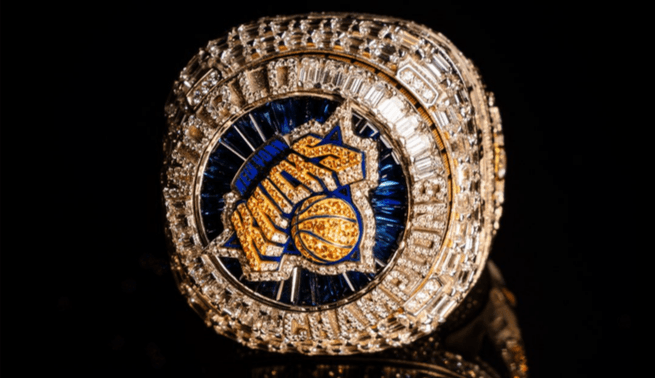
Championship rings are supposed to celebrate achievement, reward loyalty and give players and staff a lasting reminder of a special season. Apparently, the New York Knicks and Madison Square Garden chairman James Dolan decided they could also use the occasion for something else: a cybersecurity test that left employees clicking on fake promises instead of celebrating alongside the team.
According to The Athletic’s Joe Vardon, MSG employees received an email in September offering a free championship ring, complete with two design options. Those who clicked the link discovered they had fallen for a phishing test and were required to attend a cybersecurity training class.
Phishing is a serious threat to businesses, and there is no question that companies need to educate employees about recognizing suspicious emails. Steve Decola, director of end-user services, explained why these campaigns are important.
“It’s all in email and emails that look legit or large companies attempt to get the user to give up personal information like user name and password for the company they are working for,” Decola said. “It is directed at company information. So that the threat actor can go in and attack or obtain critical information about the company.”
The consequences can be significant. Phishing schemes can trick finance departments into authorizing fraudulent transactions, costing companies enormous sums of money. Decola stressed that large organizations such as MSG need to conduct these campaigns because failing to test employees can leave a company vulnerable to an attack.
In fact, Decola praised the technical idea behind the Knicks’ campaign. “Genius by the Knicks campaign, sheer genius from a testing perspective,” he said.
But he had a major problem with how the test was carried out. “The problem that I had with the campaign was that it targeted the rings and employees who should have received them.”
And that is where the Knicks’ championship celebration became a public-relations mess.
A championship ring is more than a piece of jewelry. It represents a season of hard work and a place in an organization’s history. For employees who helped make the Knicks successful, the promise of receiving one was understandably meaningful. Using that promise as bait for a cybersecurity test might have been effective from a technical standpoint, but it was also an unnecessary way to turn a moment of pride into a trap.
The optics became even worse amid reports that many longtime MSG employees, including people working in Knicks business operations, would not receive rings. Meanwhile, Knicks assistant coaches received empty ring boxes during the opening-night ceremony because the actual rings had not yet been ordered and sized. They are expected to arrive later.
Even NBA Commissioner Adam Silver appeared to be on the outside looking in during the Knicks’ ceremony. Knicks legend Walt Frazier presented the rings, while Silver sat on the opposite side of the court. The commissioner’s relationship with Dolan has reportedly been strained, adding another layer of awkwardness to the occasion.
Following the backlash, the Knicks have now clarified their plans for employee rings. An MSG spokesperson said Saturday that the organization intends to distribute more than 275 rings and pieces of jewelry to people who contributed to last season’s success.
“There is a great deal of misinformation regarding the championship rings. The plan has always been to distribute more than 275 rings and jewelry to the people in the organization who were part of last season's success,” the spokesperson said.
Cybersecurity training is necessary. Protecting company information is serious business. But there is a way to teach employees to recognize threats without making a championship ring the centerpiece of a deception.
The Knicks finally had a moment worth celebrating. Their employees deserved to be treated with respect, and Dolan’s organization should know the difference between protecting its business and creating an avoidable public-relations headache.
You Might Also Be Interested In

Floyd Girls’ Tennis Battle into Suffolk County Championship

William Floyd Soccer Make Playoff Statement With 4-1 Win

Chase the Yards on Sunday