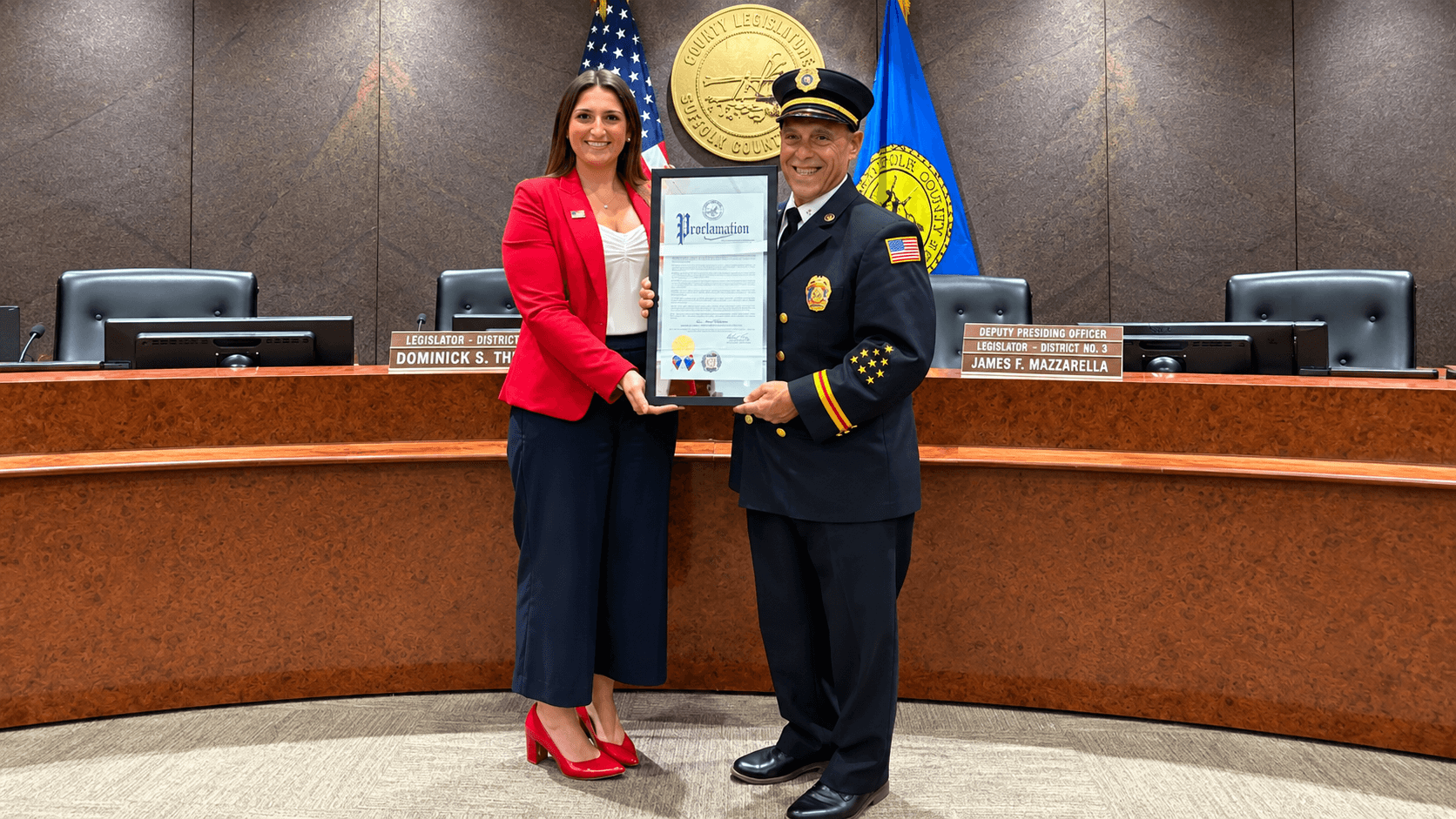

Are there safe alternatives to PFAS? Yes, plenty of them.
With Suffolk County dependent on a sole source aquifer for its potable water and it being impacted by PFAS, and people elsewhere in the nation and world affected in a variety of ways, what are the safe alternatives to PFAS?

Are there safe alternatives to PFAS? Yes, plenty of them.
As an article in Smithsonian Magazine began: “On April 6, 1938, a group of chemists at DuPont gathered around part of their latest experiment: a plain metal cylinder. It supposedly contained tetrafluoroethylene, a colorless gas. But when they opened the valve, no gas came out….Eventually someone realized they needed to cut open the cylinder to see what was going on. They found the interior of the metal unexpectedly coated with a slippery white powder.”
The DuPont chemist behind the experiment, Roy Plunkett, later recounted “the next question was, ‘What are you going to do with this stuff?’”
“Initially, scientists at DuPont didn’t have a good answer to that question, but now the material is ubiquitous in everyday objects,” the 2024 piece continued. “Since it was discovered…Teflon and its chemical descendants, per- and polyfluoroalkyl substances, or PFAS, have spread everywhere….These molecules are so common that a 2015 study found the chemicals in 97 percent of Americans’ blood. And once they make it into our bodies, medical researchers are finding that the long-lasting chemicals could be wreaking havoc.”
Indeed, that study by the International Journal of Research Public Health and other research have linked PFAS to maladies including cancer.
DuPont’s motto through the years has been “Better Living Through Chemistry.” A lawsuit brought last month by New York State Attorney General Letitia James in New York Supreme Court questions that rosy slogan. Evidence is presented which the lawsuit says shows that DuPont and other corporations involved with PFAS “knew for decades that PFAS pose substantial dangers to public health and the environment” and still continued pushing PFAS.
With Suffolk County dependent on a sole source aquifer for its potable water and it being impacted by PFAS, and people elsewhere in the nation and world affected in a variety of ways, what are the safe alternatives to PFAS?
The existence and availability of many substitute products are listed and clearly presented on a variety of websites. An excellent online source is that of the Washington, D.C.-based Environmental Working Group. Also, a good website is PFAS Central of the California-based Green Science Policy Institute. There are similar websites of other environmental organizations including the Natural Resources and Defense Council and also health advocacy groups. Even the American Chemical Society offers a list of “530 potential alternatives to per- and polyfluoroalkyl substances, PFAS” with the society admitting that PFAS are “linked to health risks” including “certain cancers.”
The PFAS information website of the Environmental Working Group (EWG) is at https://www.ewg.org/areas-focus/toxic-chemicals/pfas-chemicals It presents hundreds of listings divided by “Products Covered,” “Brand” and “Company Policy” and links to them for further details. There is, for example, under “Carpets and Rugs” Lowe’s which says “all [its] indoor residential carpet and rugs are free of PFAS chemicals.” Under “Cookware,” Green Life says, “We’ve cut out the toxins—PFAS, PFOA…so you can cook without worry.” Under “Cosmetics & Personal Care,” Sephora says “PFAS compounds: Prohibited.” Under “Dental Care,” Radius Floss says “Our USDA Organic Floss is 100%...PFAS free.” Under “Food Packaging,” Pactiv Evergreen says its products are “PFAS-free.” Under “Furniture, Office & Bedding,” Herman Miller says its products are “PFAS-free.” Under “Apparel,” Levi Straus & Co. says it has a “ban” on “all related PFAS” in its clothing.
As to claims of there being no alternative to a toxic product, an historical example of this not ringing true involves the Monsanto Company and PCBs, polychlorinated biphenyls. Monsanto starting manufacturing PCBs in 1929 and decades later feared it being banned in the U.S. after being outlawed in Japan. There, PCBs had leaked into rice oil, people got sick and some died. PCBs were being used widely especially as an insulating fluid in electrical systems. Despite Monsanto saying there were no adequate substitutes, PCBs were banned in the U.S. in 1979. What has substituted for them? Nothing space age—just mineral oil.
An issue in Suffolk County and elsewhere has been foam containing PFAS used to extinguish fires. At the Navy site in Calverton at which for decades the Grumman Corporation built and tested jets, the foam was used. Plumes containing it have been moving in groundwater, including to Swan Pond to the south. Suffolk County banned fishing in it after fish showed high levels of PFAS. There is concern about the plumes spreading toward the Peconic River.
Similarly, firefighting foam with PFAS was used at East Hampton Airport and PFAS were found in wells near it, and a 47-acre area has been designated a state Superfund site.
The use of firefighting foam with PFAS is now highly restricted in the U.S. with a phase-out going on and a transition to PFAS-free foams.
Also in East Hampton, the finding of PFAS in private and Suffolk County Water Authority wells is being connected to putting out a fire in 2023 at the East Hampton Energy Storage Center, a facility using batteries. Some 2.2 million gallons of water were poured onto batteries to extinguish the blaze, and that’s now suspected of having mixed with the perfluropropionic acid, PFPrA—a type of PFAS—from the battery system, descending into groundwater and spreading. This kind of threat at BESS (Battery Energy Storage System) facilities can’t be allowed to continue.
In New York State there’s an initiative called PFAS-Free NY. It describes itself as a “broad group of organizations, advocates and impacted community members who have come together to fight for a PFAS-free New York.” Earlier this year, it issued a statement headed: “Limiting PFAS Exposure is Central Priority for Advocates this Legislative Session.” Several measures on PFAS didn’t make it through the State Legislature last year.
Assemblymember Deborah Glick of Manhattan, who has been chair of its Environmental Conservation Committee, says PFAS “have infiltrated our bodies and the environment, creating a toxic cycle that endangers both people and ecosystems. The only way to break this cycle is to eliminate these chemicals.”
You Might Also Be Interested In
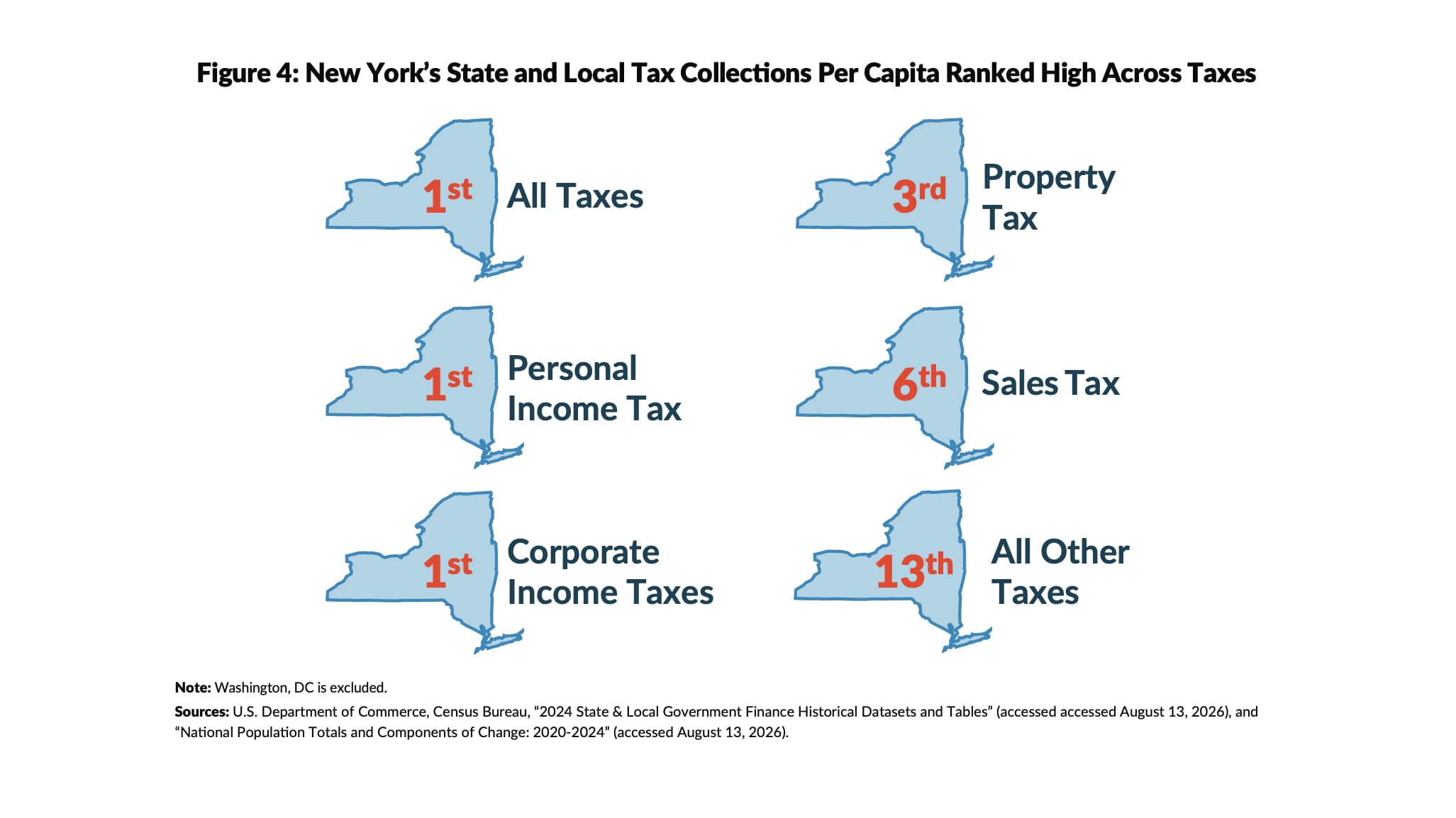
SHOCK STUDY: Tax Hell Shows How New York Bleeds Families Dry
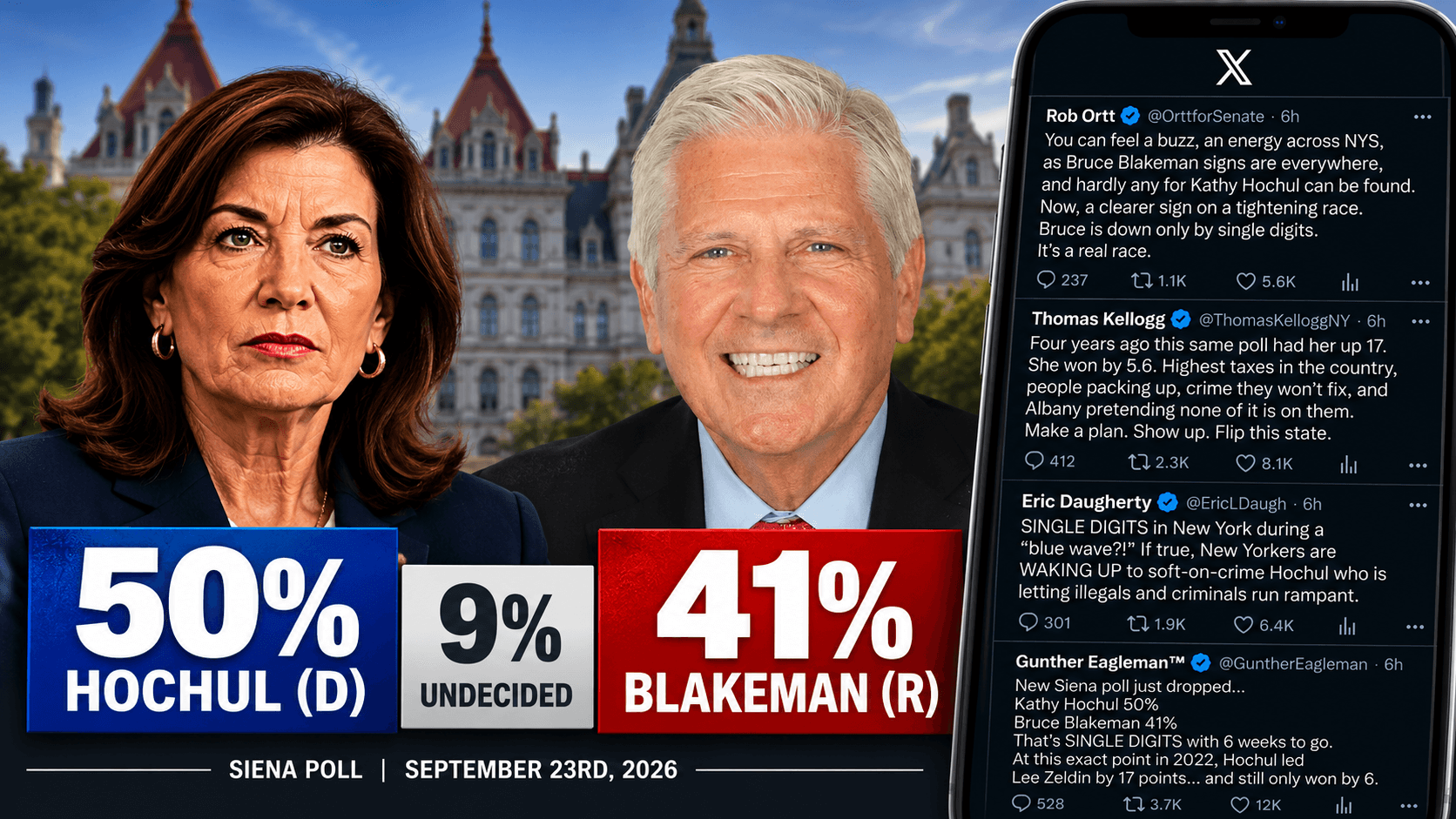
Single-Digit NYS Governor Poll Electrifies New York GOP

Blue State Blakeman Shocker: Single Digit Hochul Lead Shrinks To 9 Points