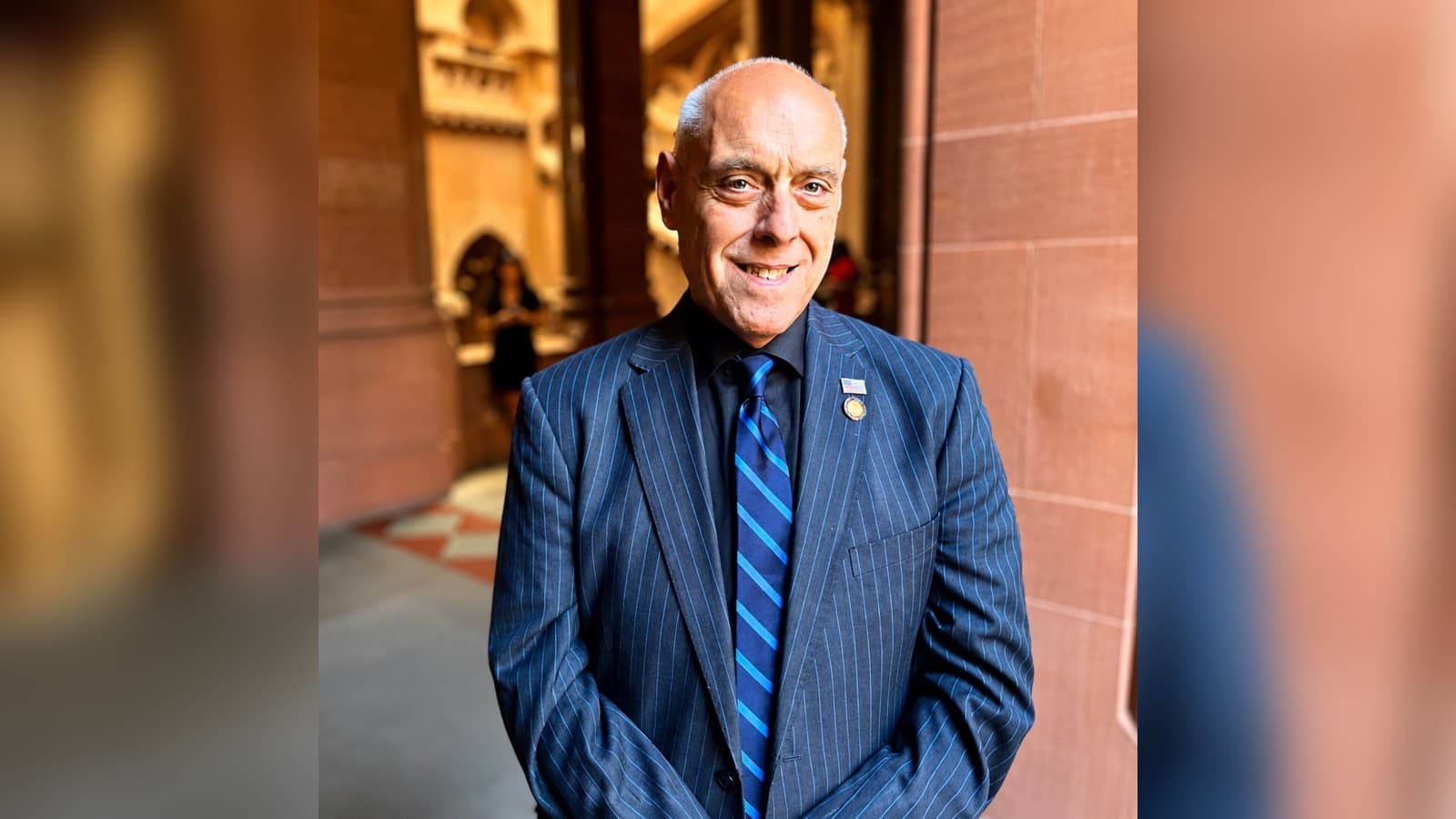

Senior Reporter Robert Chartuk: Remembering TWA Flight 800
“There was a plane crash,” he told me. “I think somewhere near you.”
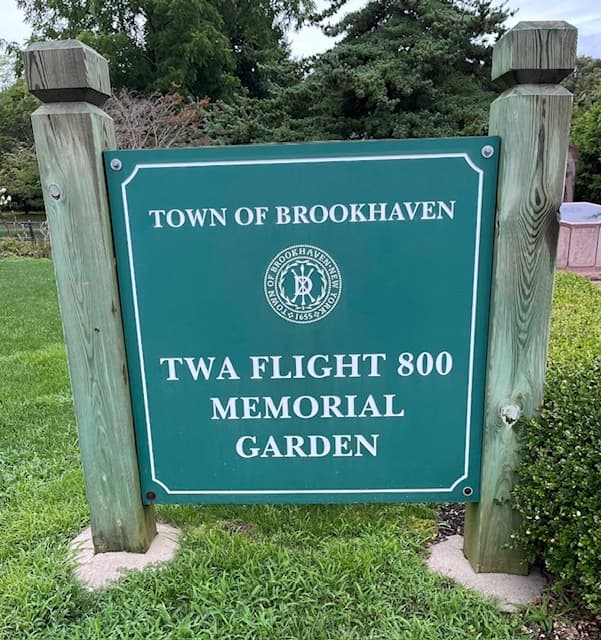
It was 30 years ago, on July 17, 1996, that the world was alerted to one of history’s worst aviation disasters, the crash of TWA Flight 800 into the Atlantic Ocean just off our shores. South Shore Press Senior Reporter Robert Chartuk looks back on this tragic event:
In the summer of 1996, I was staying at a little bungalow in Mastic Beach with a panoramic view of Narrow Bay and Fire Island. A little after sundown, the phone rang. It was my boss with the National Oceanic and Atmospheric Administration, the bureaucratic parent of the National Weather Service where I worked, calling from Washington.
“There was a plane crash,” he told me. “I think somewhere near you.”
I went outside to take a look. Exiting into the steamy night air, I was confronted by a scene from a disaster movie.
“Holy smokes,” I told him. “The sky’s all lit up, and there’s helicopters and planes all over the place.”
A police boat sped across the bay.
“Looks like something really bad happened.”
“It was an airliner, a TWA flight,” said my boss. “It’s on the news.”
White flares illuminated the sky, and the horizon pulsed with an eerie orange glow. I heard the drone of engines, and one after the other, a boat or aircraft would scream by. I took in the scene as long as I could before the mosquitoes drove me back in.
TWA Flight 800, heading for Paris, had crashed in a great fireball into the ocean shortly after takeoff from John F. Kennedy International Airport.
The phone jarred me awake the next morning, my boss again.
“Bob, NOAA has a ship on its way to the crash site. Its specialty is locating obstructions in harbors and channels to create maps for navigation. They’re going to use it to find the plane. I’m making arrangements for you to take a news crew from ABC out there to meet the ship. It’ll be a great opportunity to show how NOAA can help.”
I was to meet a local boat captain that afternoon to take me and the crew out to rendezvous with our ship. I had never met Captain Wain before, but he recognized me. Our fathers were friends a long time ago during World War II and, it turns out, my dad was the captain’s godfather. His boat, built for sport fishing, had a nice cruising speed, and we quickly passed through Moriches Inlet into the ocean. Having had a small boat on the bay for a few years myself, I was familiar with our course. In fact, I was on the water the day before and wondered what I would have done if I had been there when the plane went down.
Captain Wain hailed the NOAA ship Rude (pronounced Rudy) on the radio and, speeding toward it, we saw the many different boats now engaged not in a search-and-rescue mission, but in recovery. At that point, hope for anyone surviving such a fall from the sky was gone.
“Area off limits! What’s your business here?” yelled a sailor from a Coast Guard boat that suddenly appeared from the setting sun, his arm cocked as if he were itching to draw his pistol. Everyone looked at me.
“We’re with NOAA,” I shouted across the gap. “That’s our ship, the Rude. We’re meeting up with it.”
The cameraman filmed the encounter.
“Turn off the camera, sir,” the officer barked, his hand closing in on the gun.
He scowled at us until the cameraman jammed the equipment back into its case.
“Stand by,” he ordered as he turned to squawk into his radio.
“You have no clearance,” he shot back. “Please leave the area immediately.”
“I have orders from Washington. Your headquarters should clear us,” I said.
He barked back into his radio.
“Headquarters has no knowledge. I need you to leave now.”
The newsmen were crestfallen. They knew they were the only reporters on the scene and were anticipating a major scoop.
“Have them call my supervisor,” I yelled, enunciating the phone number. “Stand by.”
Minutes passed with the boat rising up and down like a pendulum in slow motion. Scorched pieces of foam and fabric floated by, and the sticky smell of jet fuel hung in the air. My stomach churned.
“You’re clear,” our captor finally came back, not much friendlier. “Proceed with caution.”
Out at the Flight 800 crash site, Captain Wain pulled us alongside the Rude, and with the summer swell running about two feet, it was a little tricky transferring the people and gear to the bigger ship. The captain said he would stay nearby and to radio when we were ready to go back. As he pulled away, his wake churned a strange swatch of silver and gold sparkles that grabbed our attention like an omen.
“We’re right on top of the wreckage,” Captain Sam DeBow told us up on the bridge. “It’s spread out pretty wide, about 130 feet deep.”
The newsmen hung on his every word.
“We use side-scan sonar to locate whatever’s on the bottom,” DeBow explained, his face glowing green from the light of the sonar screen. “We usually work in shipping lanes and harbors, but we can find anything that’s down there. Look at this.”
He tapped his finger on the glass.
“Most everything in nature is gradual and curvy. If you see a straight line and sharp corners, it’s not supposed to be there.”
A half-dozen heads squeezed together to see a ghostly image with broken lines and corners pan across the screen.
“That’s a piece of the plane.”
The ABC reporter filed his story from the bridge:
“This is Dan Johnson reporting from the Rude, a NOAA vessel here at the scene of the TWA Flight 800 crash. This is a special ship from the National Oceanic and Atmospheric Administration, which usually patrols our harbors and ports to produce nautical charts. On this mission, out here about nine miles off Moriches Inlet, it’s using its capabilities to find the remains of the ill-fated flight.”
My bosses at NOAA must have been proud. It was the biggest news story of the day, and our agency was getting the coverage.
“The Rude and its crew, who are part of our nation’s uniformed services, like the Army and the Navy, use a side-scan sonar called a fish to patrol the bottom,” the newsman continued.
The camera panned the deck to show the crew deploying the torpedo-shaped device.
“If anything’s down there, they will find it, and so far they’ve found plenty, a debris field stretching more than a mile and maybe even longer before the night is through. It’s a grim, but necessary, task, and the ship is playing a critical role in this massive recovery effort and also a criminal investigation to find out what brought down this 747. Reporting from the bridge of the Rude at the crash site of TWA Flight 800, I’m Dan Johnson.”
It was a public relations coup! Of all the assets at the crash site—Coast Guard, Navy, FBI, police—it was NOAA in the spotlight, and right from its own ship in the middle of the action.
“I was there for the bodies,” my friend, Big Daddy, said to me a few days later. “We were out fishing and, right around sunset, saw the whole thing. There was a streak of light like a missile heading up into the sky and then the explosion. There was no sound at first, and then it hit us square in the chest. By then the pieces were falling down in streaks of flame and smoke. We took off after it.”
He continued: “It was about nine miles out, and when we got there, the ocean was on fire from the jet fuel. I was blinded by the smoke and had to find my way through the flames, but I got us into an area where everything was floating. The first body we saw was a woman who popped up right next to us. I was on the bridge and the guys were pretty reluctant to do anything about it. And then one of ’em, he was in Nam, had no problems handling the dead. He opened up the tuna door and pulled her right in. She was completely naked. It was pretty bad, but we had to do what we had to do.”
He went on: “The next thing we know, there’s a lot of shoes floating in the water. We pulled in a mail bag and a backpack with diapers in it. And then we pulled in a pair of shoes with feet in them. That was pretty rough. We got as close to the flames as we could, but it was the fumes that got to us, burned our eyes, and made it hard to breathe. For a while, we didn’t find anything else and then suddenly, a couple of bodies popped up like they had just broken away from the wreckage. The one thing I’ll never get out of my head was the look on their faces—sheer terror. One guy’s hands were up like he was clenching the seat in front of him; he had the most horrible look on his face. And everyone we pulled in, six altogether, were totally naked, their clothes completely blown away.
“Pretty soon there were rescue boats everywhere pulling in what they could. It was cat-and-mouse with the flames, and more than once I had to throw her in reverse and back the hell out of there. There was a guy driving around with a body draped over his gunwales, and that just wasn’t right. I yelled at him to get it the hell off of there, for Christ’s sake.
“We could have pulled in more, but the ones we had were starting to bleed out and it was a mess. We didn’t want to start stacking ‘em on top of each other, so we headed for shore. They told us to go to the Coast Guard Station, and what a sight that was. Bodies were lined up on the docks like cordwood. Boats were unloading and heading back out. Once we pulled into the station, the authorities took over. They unloaded everything and decontaminated the boat. Then they decontaminated us, sprayed us with bleach, but the problem was they didn’t have any water to rinse us off, so we stood there with the Clorox burning our privates.
“We decided not to head back out. One thing I’m pretty sure of, the plane was blown from the sky. Terrorists, or maybe it was the Navy doing some kind of exercise in the area, and now it’s one big cover-up. All’s I know is we saw something streak through the sky toward that plane and then we saw the explosion. It came down in burning pieces. Nobody had a chance.”
Many along the coast that tragic evening said they saw a streak of light like a missile rise up into the sky and shoot down TWA Flight 800. Conspiracy theories abounded. One was that terrorists shot down the plane, and another had the U.S. Navy, which was conducting exercises in the area, sending it to its doom.
The crash was investigated as a crime, and the FBI, among all of the government assets involved in the recovery operation, became the lead agency. Daily briefings took on an urgency to get to the bottom of what caused the 747 to fall from the sky in flames.
The NOAA ship Rude crisscrossed miles of ocean and located almost every piece of the downed aircraft, and then dive teams spent almost a year in 120 feet of water recovering them. Huge salvage ships from the Navy, the Grapple and the Grasp, were on the scene, and the wreckage was brought to an empty airplane hangar at the old Grumman plant in Calverton. Experts painstakingly put the Boeing plane back together piece by piece like a giant jigsaw puzzle.
Eventually, the FBI determined that the crash was not due to terrorist activity, and the National Transportation Safety Board took the lead in trying to figure out what went wrong. Four years after the catastrophe, the government agency announced its findings in a report that exonerated the Navy. The official explanation focused on the plane’s center fuel tank, which was only partially filled since the flight from New York to Paris did not necessitate a full load. A spark from a malfunctioning gauge ignited the volatile air/fuel mixture in the near-empty tank, causing it to explode, concluded the NTSB.
Lending credence to the explanation, they said, was the captain, recorded on the plane’s black box 10 minutes into the flight, voicing concerns about “a crazy fuel flow indicator on number four.”
The reports of a missile rising into the summer sky were explained away by what happened to the plane after it exploded. The blast separated the front of the aircraft from the fuselage, causing it to rise into the air. This rising streak was what the witnesses reported as a missile, the NTSB contended. Plus, an examination of the reconstructed plane in the Grumman hangar showed no impact from a projectile.
For my involvement in the crash response, I was awarded a Navy Commendation Medal along with my NOAA colleagues during a special ceremony at the East Moriches Coast Guard Station.
My dad had received the same medal during his service in World War II, a recognition much more deserving than mine.
It’s been 30 years since the crash, and I know many of my friends and neighbors are still impacted by the tragedy, as am I. The Flight 800 memorials at Smith Point Park and Kahler’s Pond in Center Moriches, just down the road from my house, serve as constant reminders of what was lost that day.
You Might Also Be Interested In

New York Moves on Multiple Fronts to Restrict AI
OPERATION ROTTEN APPLE: ICE Nabs 2,197 In NY Sweep
Health Officials Warn of Growing Tick Threat