

Israeli Troops Cross Gaza's Yellow Line in Daylong Operation Against Hamas Tunnel
The Nov. 18 incursion near Nuseirat and Bureij was the first ground operation beyond the ceasefire boundary that Israel's military has announced since October 2025, and Hamas called it a flagrant violation of the truce.
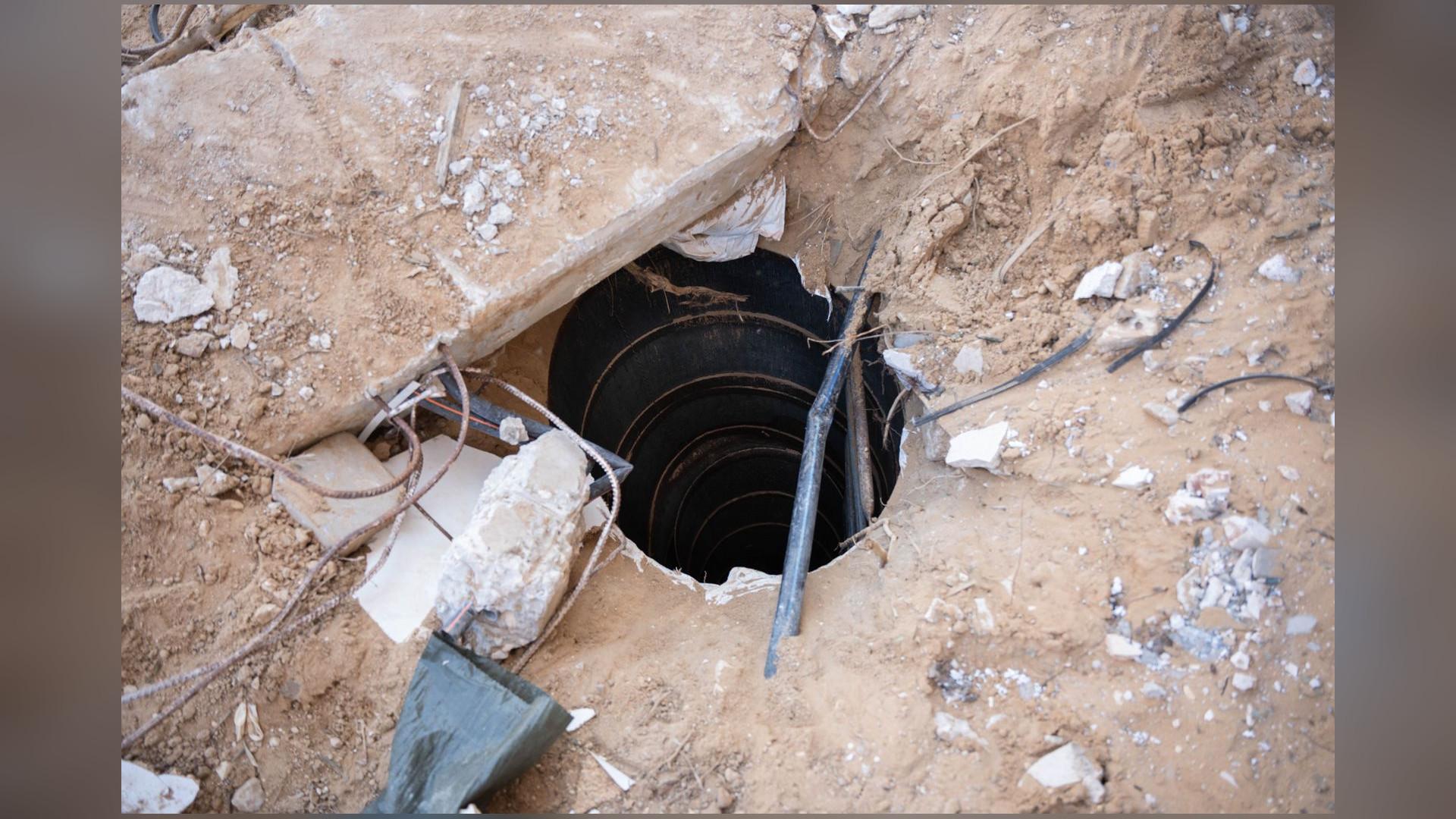
Israeli tanks and bulldozers pushed into the Hamas-controlled part of central Gaza on Nov. 18 to destroy what the military called a "terror tunnel." It was the first ground operation on the far side of the Yellow Line that Israel's military has publicly announced since the ceasefire took effect in October 2025. The force withdrew roughly a day later, and on the morning of Nov. 19 Israel's civil affairs agency for the Palestinian territories said the main road through the area was open again.
The troops moved in east of the Nuseirat camp, north of Bureij, and then onto Salah al-Din Road, the territory's main north-south route. Early that afternoon the civil affairs agency, known as COGAT, told residents to keep clear of the area and closed a section of the road to traffic. Artillery fire covered the advance, and families left their homes and tents as the vehicles approached.
The Israel Defense Forces said the operation was carried out alongside the Shin Bet, Israel's domestic security agency, against a tunnel that "posed an immediate and direct threat to IDF troops." In a statement the military added, "IDF troops under the Southern Command are deployed in the area in accordance with the ceasefire agreement and will continue to operate to remove any immediate threat." Once the operation ended, the military said the tunnel crossed beneath the Yellow Line and that Hamas had been working to restore it.
Hamas called the incursion and the evacuation order "a dangerous development and a flagrant violation of the ceasefire agreement." The group urged the mediators of the truce and the Trump administration to step in.
Three people died in separate Israeli drone strikes on Nov. 18, Gaza's civil defence agency said, one near Nuseirat, one in Gaza City and a third in Deir al-Balah. Israel's army said it had aimed at militants in two of those strikes and knew of no incident in Deir al-Balah. The Hamas-run government media office estimated that 6,000 people fled because of the operation.
"We fear this may be the start of a broader operation and that displacement will begin anew, as we have not yet recovered from the effects of the previous war and displacement," Mahmoud al-Saafin, 27, a Bureij resident, told a wire reporter. Video taken after the pullback showed earth berms and deep vehicle tracks along Salah al-Din Road, more than a kilometer beyond the line. Umm Mohammed Badawi, who lives in Nuseirat, said she had come back to collect belongings "so that we might be able to sleep and live until the situation calms down."
Defense Minister Israel Katz said in a statement on Nov. 18 that Israeli forces would stay in their security zones in Gaza, Lebanon and Syria until Hamas has been dismantled and the territory demilitarized. If fighting escalates, he said, the army is ready to take more ground, move residents out and fold those areas permanently into Israel's security zones. Katz spoke amid unsettled politics at home, where inconclusive elections have left Benjamin Netanyahu as caretaker prime minister while the opposition's Gadi Eisenkot tries to assemble a coalition without him.
The incursion followed a report that the Board of Peace, the U.S.-backed body overseeing the truce, sent to the UN Security Council. It faulted Israel and Hamas alike for failing to meet their commitments. "A ceasefire that delivers nothing visible cannot be sustained indefinitely," the board wrote. Senior Hamas official Basem Naim called the report "pure disinformation."
Israeli strikes have continued almost daily through the truce. On Nov. 14 an airstrike in Khan Younis's Mawasi district killed Samir Abu Younis, commander of the Rafah Brigade of Hamas's armed wing, and the Israeli military confirmed his death. Gaza's health ministry puts the death toll since the ceasefire began at more than 1,650 Palestinians. The UN humanitarian agency counts about 1.4 million people who live in tents or improvised shelters, and Israel's military puts the share of Gaza under its control at more than 60 percent.
Residents returning on Nov. 19 found the road reopened. The truce around them rests on commitments the Board of Peace says neither side has met, and on a defense minister's pledge to seize more territory if the fighting grows.
You Might Also Be Interested In
Russian Cruise Missile Lands in Southeastern Poland During Massive Strike on Ukraine

Trump and Xi Meet in Shenzhen and Agree to Draft a Stability Action Plan

Danish Parliament Approves Greenland Defense Agreement With the United States