
UAE Cuts All Trade With Iran After Missile Attack Claims
The Gulf nation called the strikes a deliberate act of aggression; Tehran denied firing any missiles
The United Arab Emirates on Wednesday severed all trade and financial ties with Iran, charging that the Islamic Republic had fired two ballistic missiles at Emirati territory in the latest flare-up of a conflict now entering its sixth week.
The UAE's Ministry of Defence said its air-defense systems tracked and detected both missiles, which officials said were launched from Iranian soil. One struck UAE territorial waters; the other landed beyond them. The ministry said its assessments suggested the projectiles were aimed at maritime traffic in the region. Iran's Foreign Ministry flatly denied responsibility, with spokesperson Esmaeil Baghaei characterizing the allegations as a "false flag operation" organized by the United States and Israel.
In a formal statement, the UAE's Ministry of Foreign Affairs declared it was suspending all commerce, financial exchanges and trade with Iran "until further notice," pointing to escalations it said endangered regional peace and stability. The ministry affirmed the UAE's commitment to dialogue but said the missile strikes left the government with no viable alternative.
Analysts characterized the embargo as potentially more harmful to Iran than U.S. sanctions alone. Iran has long leaned on the UAE — and Dubai in particular — as a re-export hub and a conduit to international goods markets. A retired U.S. general and former assistant secretary of state said that in some respects the UAE embargo exceeds the bite of American sanctions, because Iran depends on the Emirates not for outlets for its own exports but for access to goods and commercial networks from third countries.
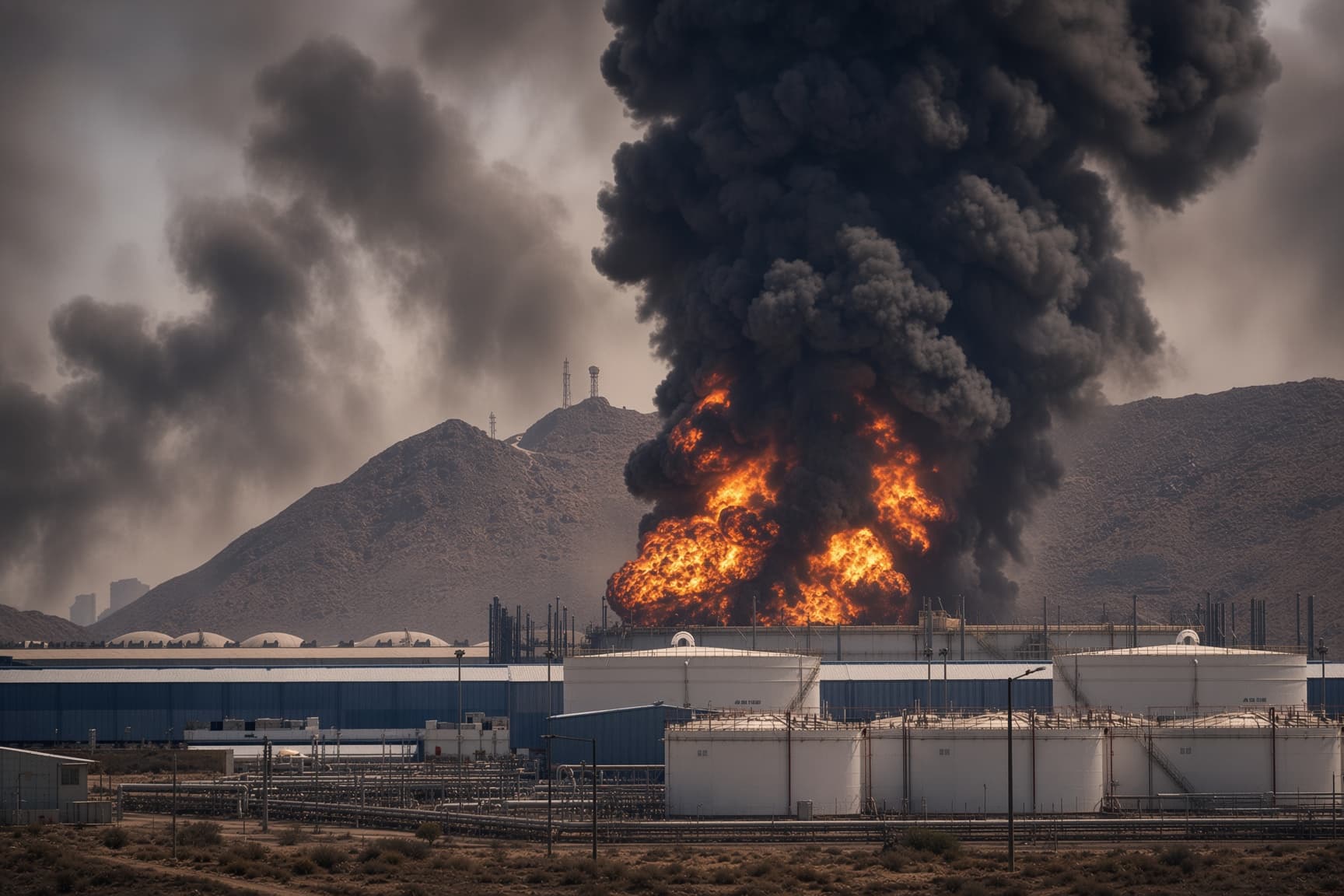
Since the conflict erupted Feb. 28 — when U.S. and Israeli strikes killed then-Supreme Leader Ayatollah Ali Khamenei — Iran has launched hundreds of ballistic missiles, thousands of drones and conducted repeated strikes on UAE infrastructure, energy terminals and the port of Jebel Ali. Those attacks have killed 15 people in the UAE and wounded nearly 250. Nearly 20 tankers belonging to Abu Dhabi's state oil company ADNOC have been hit in the Strait of Hormuz, which Iran has exploited to choke off oil and gas shipments. Only about one-tenth of the vessels that once passed through the strait each day were doing so this week.
President Donald Trump insisted Tuesday that the strait was "open and operating," and shared a map that showed it labeled as U.S. territory — a claim Iranian officials dismissed.
A June 17 memorandum of understanding between Washington and Tehran expired Monday with little sign of renewal, stripping away a diplomatic check on further escalation. The trade embargo — encompassing not only goods originating within the UAE but also re-exports of products from other countries — threatens to cut off one of the few remaining economic arteries available to the Iranian government, which is already operating under simultaneous U.S. sanctions and a naval blockade of its own ports.
Before the war, the Strait of Hormuz carried roughly one-fifth of the world's traded oil and gas. International crude benchmarks rose more than 1% Wednesday as markets digested the embargo announcement.
You Might Also Be Interested In
UN Official Says U.S. Drug-Boat Strikes May Be Crimes Against Humanity

Vatican Puts Crowd at 800,000 for Pope Leo's Mass in Paris
After the WTO: China’s Rise, Our Factories, and the PPP Mirage