

Gas Prices Are Coming Down From Their Iran Spike — But the Real Story Is What Didn't Happen
Oil markets are pricing a manageable disruption in the Persian Gulf even as US and Iranian forces continue trading strikes, a sign that the panic phase of this crisis may already be behind us

Something worth noticing happened this past week: US and Iranian forces kept exchanging strikes, Iran kept declaring the Strait of Hormuz closed, and oil prices went up — then started coming back down. That's not the pattern of a market bracing for catastrophe. It's the pattern of a market that priced in the worst case earlier, watched actual tanker traffic keep moving, and is now recalibrating toward a "manageable disruption" scenario rather than a full blockade.
The mechanics matter here. Roughly a fifth of global oil consumption transits the Strait of Hormuz, and Iran's stated ability to close it has always been the nightmare scenario for energy markets. But closing a shipping lane in practice is harder than declaring it closed on state media. Reports over the weekend indicated some tankers were still crossing with transponders switched off — a sign that commercial shipping is adapting to risk rather than simply stopping. Meanwhile, alternative crude flows, including barrels that would otherwise have been sanctioned or constrained, have been finding their way to market, cushioning the supply shock.
That's the encouraging read. The less encouraging one is that this is still, by any normal standard, an active shooting war between two states, one of which is a nuclear near-threshold power and a top-five global oil producer. Wall Street's own energy and geopolitics desks are now describing the situation as moving from "pricing disruption" to "pricing peace" to "pricing implementation" — meaning markets have absorbed the idea of an ongoing, low-grade conflict as a durable condition rather than a resolved crisis. That's a meaningfully different risk than what existed a month ago, and the margin for error — a successful strike on a major production or export facility, an actual attempt to physically mine the Strait — remains uncomfortably thin.
For Long Island households and businesses, the transmission channel is straightforward: gas pump prices, home heating oil costs heading into next winter, and the broader inflation reading the Federal Reserve watches when it sets interest rates. A sustained move in crude prices doesn't just cost you at the pump; it works its way into trucking costs, into the price of anything shipped by container, and eventually into the Fed's calculus about whether it can cut rates or needs to hold them higher for longer to keep a lid on energy-driven inflation. Mortgage rates on the Island are already elevated by any historical standard, and an oil shock that sticks around is one more reason the Fed might not feel comfortable easing.
The practical takeaway isn't to panic at every headline out of the Gulf. Markets have shown, repeatedly now, that they can absorb escalation without a full repricing as long as physical crude keeps flowing. But it's also not a green light to assume the crisis is contained. What's actually being priced is a bet that both sides continue an "escalate to de-escalate" pattern — inflicting damage without crossing into the kind of attack that would actually choke off the world's most important oil chokepoint. That bet has held so far. It's a bet, not a guarantee, and Long Islanders filling up their tanks or locking in a heating oil contract this fall should treat the current calm as conditional, not settled.
You Might Also Be Interested In

The Fed's Rate-Hike Whisper Just Got a Bond-Market Megaphone

$40 Trillion Later, Washington Still Hasn't Learned to Balance a Budget
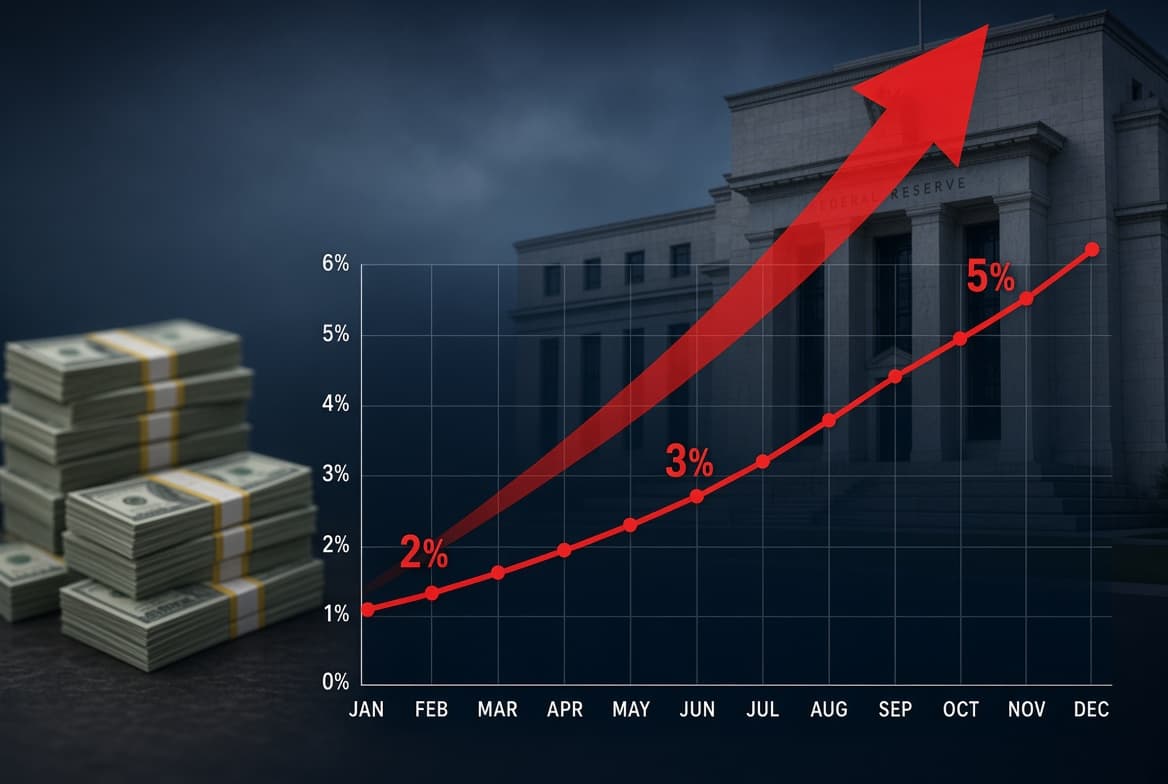
The FOMC Minutes Just Quietly Floated Rate Hikes. Nobody's Pricing That In.