

Memory Chips Just Had Their Worst Week in Years. Here's Why It Matters More Than a Stock Selloff
A record one-day crash in South Korean chipmakers wasn't really about semiconductors — it was a warning shot about how much of the AI boom is built on borrowed confidence
Last week, South Korea's stock market had one of its worst days in decades. The benchmark Kospi index fell nearly 9% in a single session, dragged down by a record decline in SK Hynix and a double-digit drop in Samsung Electronics — the two companies that make most of the world's memory chips. For a Long Island reader with no exposure to Korean equities, this might look like someone else's problem. It isn't.
Memory chips — the DRAM and NAND flash that go into everything from smartphones to the servers powering AI data centers — are the closest thing the modern economy has to a universal input. When the companies that make them get spooked, it tends to mean one of two things: either demand is genuinely softening, or expectations built up over the past year got so extreme that even good news can't clear the bar. The evidence right now points mostly to the second explanation, but the distinction matters enormously for anyone trying to figure out whether the AI investment boom is durable or a bubble waiting for a pin.
Here's the tension. Taiwan Semiconductor, the company that actually manufactures the chips designed by Nvidia and others, just reported blowout numbers — revenue up sharply for the quarter, with June sales even stronger than the quarter as a whole. That is about as clean a signal as you can get that underlying demand for AI computing power remains real. At the same time, SK Hynix has been warning that memory shortages could persist for years, which sounds bullish on its face but also means the supply chain has priced in a level of scarcity — and pricing power — that leaves very little room for disappointment. When a sector trades on the assumption that demand will outstrip supply indefinitely, any wobble in the growth rate, any hint of inventory building up in the channel, or any sign that customers are double-ordering to hedge against shortages can trigger an outsized reaction.
That last point deserves attention. Supply-chain checks are starting to flag a familiar pattern: some memory buyers may be over-ordering out of fear of running short, which can make demand look stronger than it actually is until the order books catch up to reality. This is not a new story — it's the same dynamic that has inflated and deflated tech cycles going back decades. The difference this time is the sheer scale of the money involved, with hyperscale data center operators now committing hundreds of billions of dollars a year to AI infrastructure that depends on a steady supply of these chips.
For Long Island households and businesses, the connection runs through a few channels. First, memory chips are a real input cost for consumer electronics, appliances, and increasingly, cars — so price swings eventually show up at the register, feeding into the same inflation dynamics the Fed is watching. Second, and more broadly, semiconductor stocks have become a bellwether for the entire AI capital-spending story that markets have leaned on to justify elevated valuations. If that story cracks, it doesn't stay contained to Korean equities; it ripples through 401(k) balances and the broader risk appetite that has kept credit flowing to everything from small businesses to local construction projects.
The honest read is that nothing in the current data suggests the AI capex cycle is ending. Order books remain full, and the biggest spenders — Meta, Google, Amazon — have shown no signs of pulling back; if anything, they keep raising their spending plans. But full order books built on a foundation of scarcity pricing and hedge-buying are a different, more fragile thing than order books built on straightforward growth. Investors have been reminded of that distinction once already this month. The lesson for ordinary savers is not to panic every time a chip stock in Seoul has a bad day, but to recognize that a meaningful chunk of what's propping up equity markets — and by extension the broader economy's sense of confidence — now depends on a handful of companies delivering flawless execution, quarter after quarter, with no room for error.
You Might Also Be Interested In

The Fed's Rate-Hike Whisper Just Got a Bond-Market Megaphone

$40 Trillion Later, Washington Still Hasn't Learned to Balance a Budget
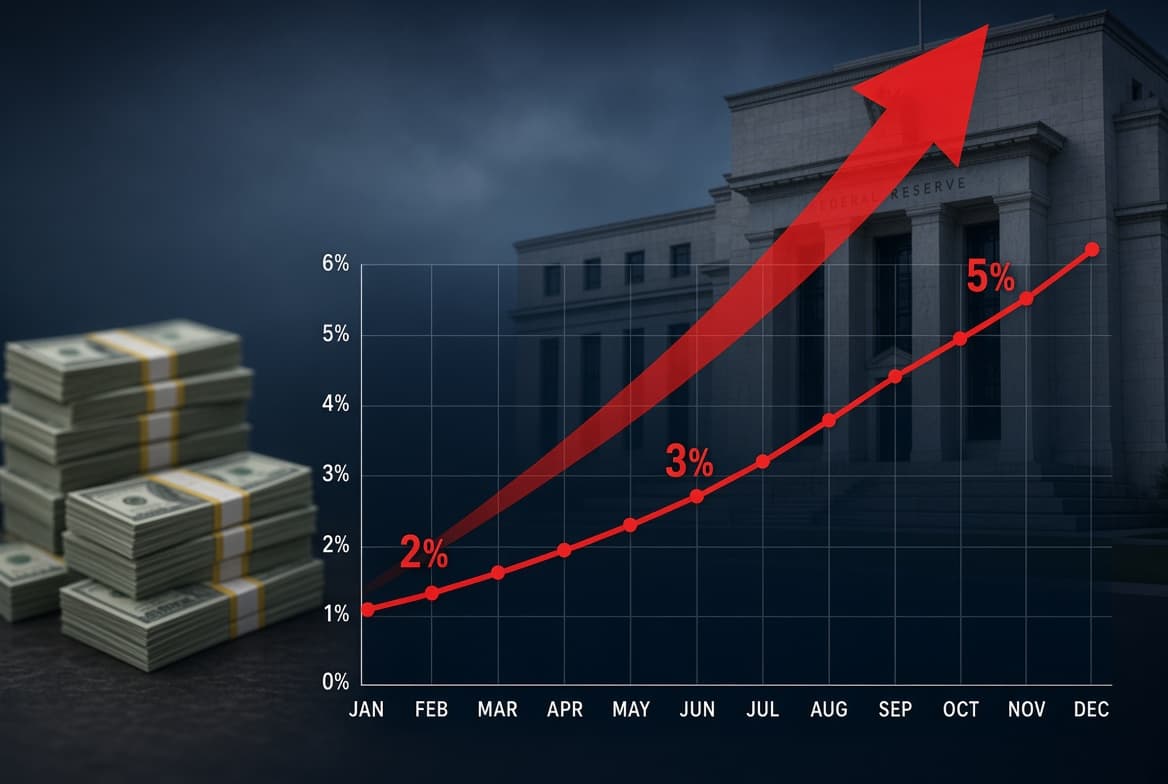
The FOMC Minutes Just Quietly Floated Rate Hikes. Nobody's Pricing That In.