
Small Business Confidence Just Rose to a Wartime High. That Tells You Something About Resilience, Not Comfort.
The NFIB optimism index hit its best level since the Middle East conflict began, even as hiring plans stall and the labor market keeps sending mixed signals
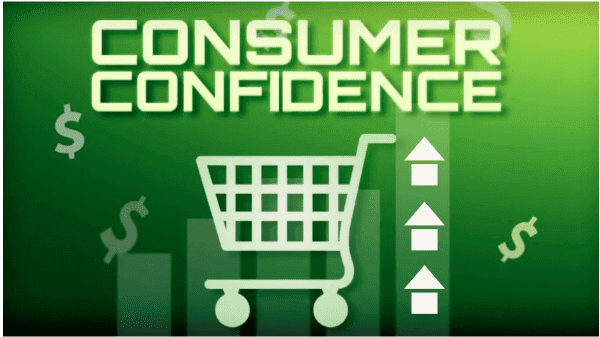
Buried beneath the noise of oil spikes and tech earnings this week was a smaller, stranger data point: the National Federation of Independent Business optimism index rose to its highest level since fighting broke out in the Middle East, climbing more than two points to reach the upper 90s on the index's scale. Uncertainty among small business owners eased modestly too. On its face, that's a genuinely good sign — small businesses employ roughly half of the private-sector workforce nationally, and a huge share of Long Island's own economy runs through owner-operated shops, contractors, and small professional practices rather than corporate headquarters. But the details underneath the headline number are worth a second look, because they complicate the feel-good story.
Hiring intentions did tick up, and job openings improved — that's the encouraging part. But a growing share of firms also reported difficulty finding qualified applicants, a complaint that's less about a booming labor market and more about a persistent mismatch between the skills employers want and the workers actually available at the wages they're offering. That's a subtly different story than "business is so good we can't hire fast enough." It's closer to "we'd like to hire, but the labor pool doesn't match what we need," which is a structural problem, not a cyclical one, and it doesn't resolve itself just because confidence improves.
There's also the matter of pricing. More small firms reported plans to raise their own selling prices in the survey, a detail that sits uneasily next to a Fed that is watching this week's CPI report as closely as any release in months. Small businesses raising prices isn't inherently alarming — it's often just firms passing through their own higher input costs, from wages to insurance to, increasingly, energy — but it does undercut the narrative that inflation pressure is confined to a few pandemic-era categories that are finally cooling off. If Main Street pricing power is holding up even as big-box retailers report price-fatigued shoppers pulling back, that's a sign the inflation fight isn't over so much as it's shifted arenas, from goods to services, from big companies with pricing algorithms to small ones simply trying to cover their costs.
The timing here matters too. This confidence bump arrived during a month when oil prices spiked on renewed U.S.-Iran hostilities, when a new Fed chair was testifying to Congress for the first time, and when a hawkish Fed governor was openly floating a rate hike depending on the inflation data. Small business owners aren't necessarily plugged into the daily churn of Fed-speak, but they are exquisitely sensitive to their own input costs, their own local demand, and their own ability to borrow. A rise in optimism against that backdrop suggests the small-business sector, at least for now, is reading current conditions as more stable than the geopolitical and monetary headlines might imply — or it suggests owners are simply exhausted with uncertainty and grading on a curve. Either interpretation is plausible, and the difference matters for how much weight policymakers and voters should put on this data point.
For Suffolk County specifically, small business sentiment is not an abstraction — it's the pulse of Main Streets from Patchogue to Huntington, where local retailers, contractors, and service firms make hiring and pricing decisions every week that ripple through the regional economy far more directly than any single Big Tech earnings report. If national small-business optimism is genuinely improving even as hiring remains selective and prices keep creeping up, the practical takeaway for local business owners and workers alike is that the labor market is not loosening dramatically in either direction — it's staying tight enough to keep wage and price pressure alive, which is exactly the kind of ambiguous signal that keeps the Fed cautious and keeps mortgage and small-business loan rates from falling quickly, regardless of how confident owners say they feel.
You Might Also Be Interested In

The Fed's Rate-Hike Whisper Just Got a Bond-Market Megaphone
$40 Trillion Later, Washington Still Hasn't Learned to Balance a Budget
The FOMC Minutes Just Quietly Floated Rate Hikes. Nobody's Pricing That In.