

When the Long Island Express Roared Ashore
The 1938 hurricane devastated Long Island with 100-mph winds, massive flooding and a storm surge that reshaped the South Shore.
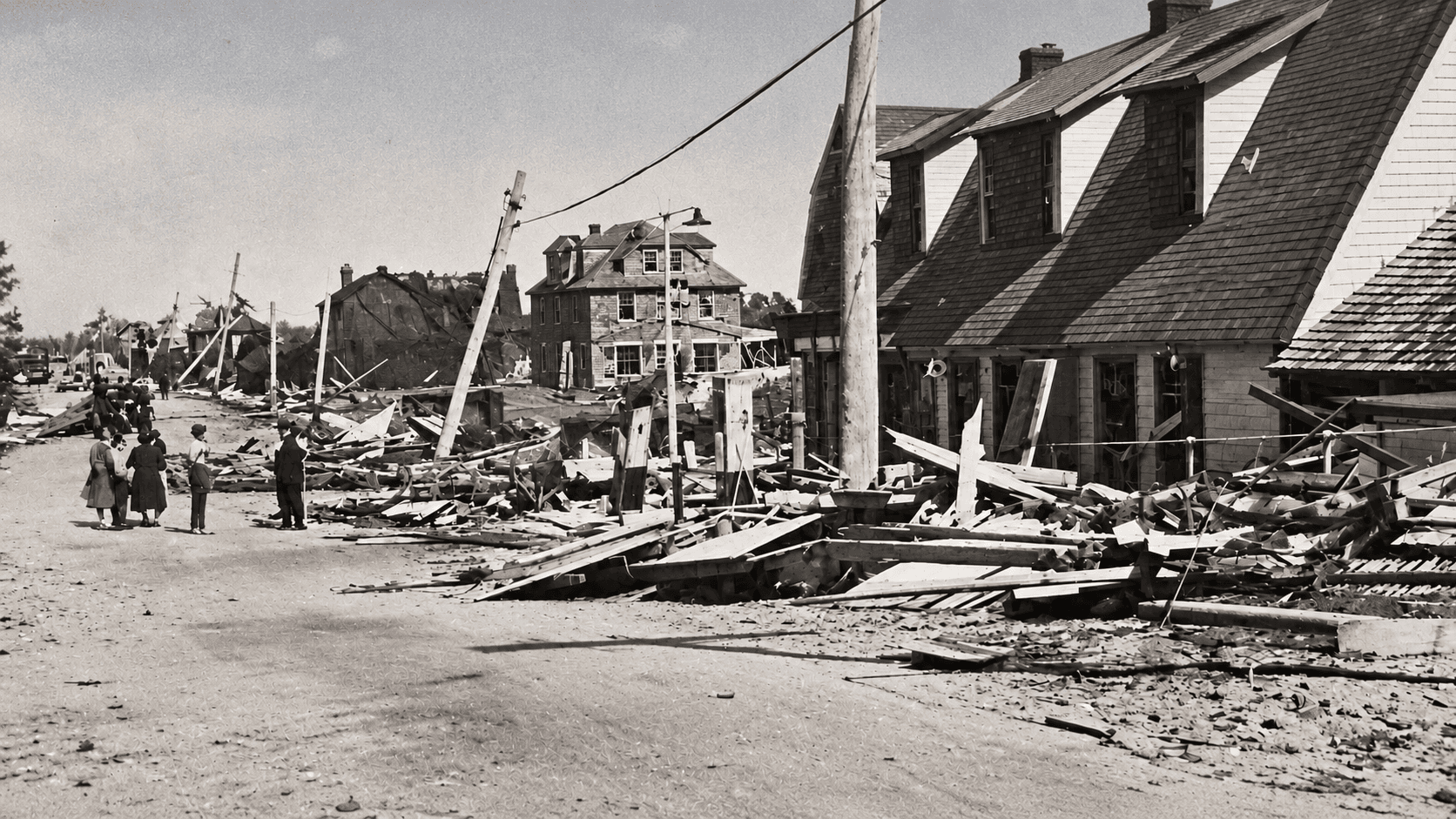
The East Coast hurricane season has been quiet so far, but residents shouldn’t be lulled into complacency. Another monster storm like the 1938 Long Island Express could strike again.
On Sept. 21, 1938, one of the most destructive storms in Suffolk County history roared ashore at Westhampton Beach with winds topping 100 mph and a powerful storm surge that obliterated miles of coastline.
The ocean swept across the barrier island, cutting new inlets from Cupsogue to Quogue and destroying Coast Guard stations, beach clubs and scores of homes. Main Street in Westhampton Beach was covered by six feet of water. At the Six Corners School, about 200 children escaped only because classes had been dismissed shortly before waves reached the building.
Survivor Norman Hubbard recalled clinging to the Beach Lane Bridge as homes, roofs and debris crashed through the water around him.
“People and animals were clinging to their roofs,” Hubbard remembered. “It was shocking to see this.”
Others survived by swimming through collapsing houses or taking refuge in the few structures that remained standing. James McFarland later searched the wreckage from a small plane before discovering that his father and brothers had survived.
In Quogue, the storm carved a 400-foot-wide breach through the barrier island, destroyed the Quantuck Beach Club and pushed floodwaters nearly a mile inland. Montauk was separated from the mainland as the storm destroyed the Long Island Rail Road line.
The East End lost 29 residents, while 179 houses were destroyed.
After a direct hit on Westhampton, the hurricane raced across Long Island Sound into Connecticut, carrying its destruction through New England. Powerful winds, severe flooding and a massive storm surge battered coastal communities far inland, sweeping away homes, businesses and boats. The storm continued north through Massachusetts and Vermont, toppling trees and power lines and leaving a broad trail of destruction.
Nearly nine decades later, Shinnecock Inlet and the reshaped shoreline remain permanent reminders of the storm’s power — and of Long Island’s continuing vulnerability to the sea.
You Might Also Be Interested In
Marine Crews Make Predawn Ocean Rescue
Hands-On Program Turns Wind Into Energy

Cops Bust Big Yaphank Street Takeover