
Albany Wrote the Rules Behind Long Island's Higher Power Bill
LIPA's proposed 2027 budget puts the typical 7.3 percent above the adopted 2026 level at the same usage. Federal price data and the grid operator's own warnings trace the pressure to state energy policy, set by a party voters just kept in power.
Long Island got its first look at next year's electric bill this week, and the number LIPA chose to feature is the friendlier one. The Long Island Power Authority's proposed 2027 budget sets the typical residential bill at $215.41 a month for 750 kilowatt-hours. Its budget book shows that figure sits $14.73, or 7.3 percent, above the adopted 2026 budget at the same usage. The authority's announcement led with a different comparison, $5.64 or 2.6 percent below its updated 2026 estimate. Both figures are accurate, and the smaller one looks like relief only because this year's power supply costs ran far past plan. The book projects 2026 power supply spending at about $2.5 billion, roughly $500 million above the $2 billion adopted budget.
A 7.3 percent increase lands on households that already pay far more than most of the country. Federal Energy Information Administration data show New York's average residential price at 29.26 cents per kilowatt-hour for January through August 2026, against 18.19 cents nationally. Only Hawaii, California, Maine and Massachusetts posted higher averages over those eight months. New York's price rose 12.1 percent from the same stretch of 2025, while the national figure climbed 6.8 percent. Over the 12 months ending in August, the national residential average stood at 18.04 cents.
Albany has settled on a culprit. In February, Gov. Kathy Hochul announced a Public Service Commission proceeding meant to ensure data centers "cover the costs of their expansion as it relates to utilities." State Sen. Kristen Gonzalez said in the same announcement that data centers are "raising the utility rates for New Yorkers already struggling amidst an affordability crisis." On June 4 the Legislature passed a data center bill, S10642 in the Senate and A11560 in the Assembly, where Didi Barrett carries it. The bill would pause permits for large data centers for a year, and the Assembly's bill record lists no action after that date. Hochul then issued Executive Order 62 on July 14, holding state environmental permits for big new data centers until the state's Department of Public Service finishes a statewide review.
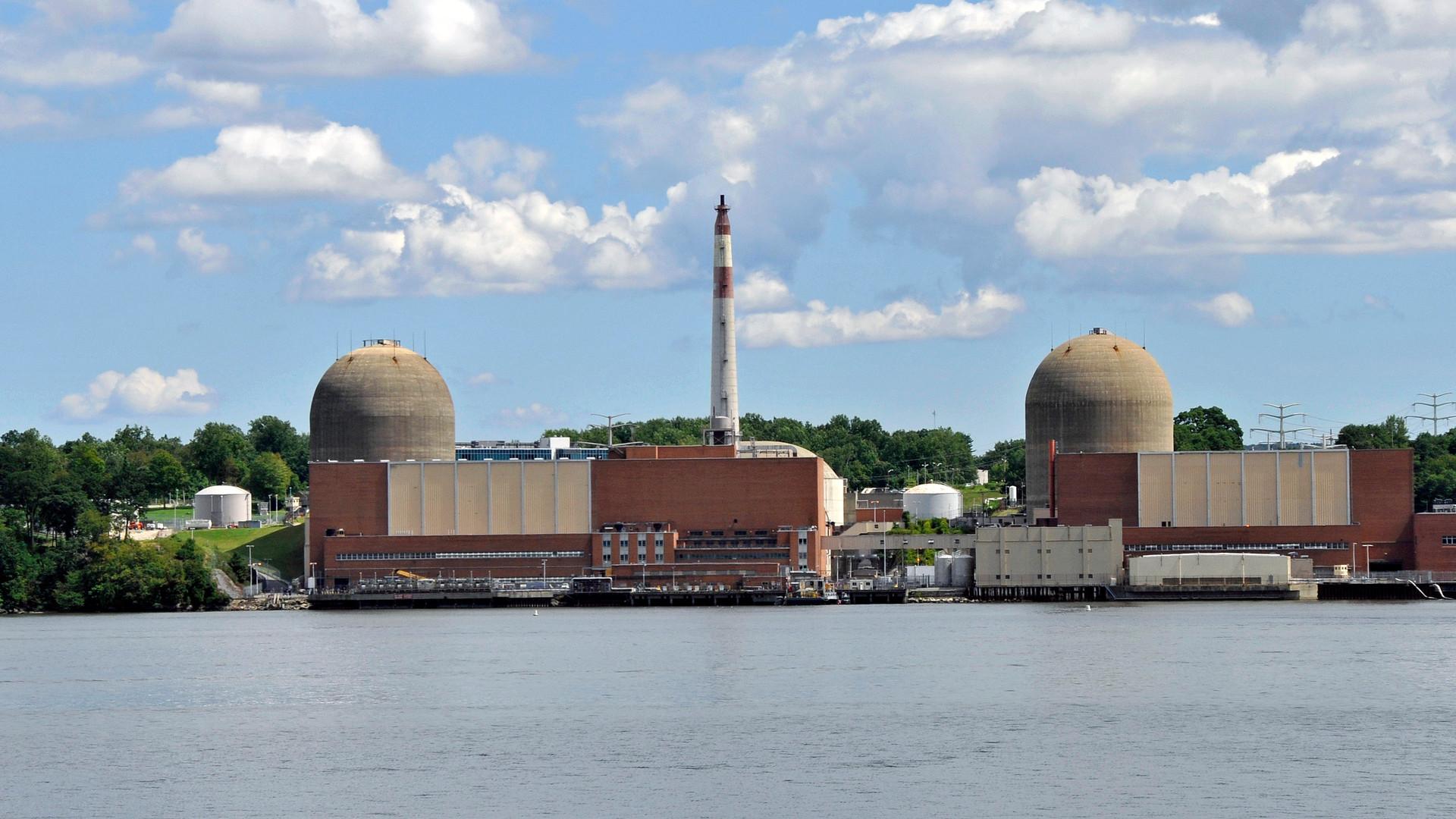
The state's own grid operator traces the squeeze to choices made in Albany. In its 2026 Power Trends report, NYISO, which runs the state grid, said rising wholesale prices are best understood as "the predictable result of current grid conditions as shaped in response to policies and other factors." It named the shutdown of Indian Point and the retirement of peaking plants under state emissions rules as central reasons supply has shrunk. "Markets do not create scarcity; they reveal it," the report said. It also warned that mandates favoring particular technologies can "hasten the retirement of existing resources, resulting in increased consumer costs and reduced system reliability." By NYISO's count, 4.4 gigawatts of generation have shut down since 2019 while 2.9 gigawatts came online, and the baseline summer cushion fell from 2,227 megawatts in 2019 to 417 megawatts this year.
Indian Point is the clearest case. Under a 2017 settlement between Entergy and New York State, the plant's last reactor went dark on April 30, 2021. Holtec, the site's new owner, says that final shutdown pulled about 1,000 megawatts off the regional grid, output NYISO describes as "zero-emission, round the clock generation." NYISO's report also recounts how proposals to rebuild the Gowanus and Narrows plants in New York City and the Danskammer plant in Newburgh with modern gas units died after state regulators judged them inconsistent with the climate law.
The consequences show up in NYISO's reliability filings. In 2023 the operator found New York City could fall short by as much as 446 megawatts on a peak summer day starting in 2025, and it kept the old Gowanus and Narrows barge turbines running to cover the gap. An NYISO report dated April 15, 2026, said those turbines are designated as needed until May 1, 2029. The same report identified a Long Island shortfall beginning in summer 2027 and chose a PSEG Long Island generation plan to meet it. New York has also barred high-volume hydraulic fracturing since the state Department of Environmental Conservation's findings statement of June 29, 2015, and the 2020 state budget wrote the ban into law. NYISO adds that gas plants face fuel limits in severe cold because heating customers come first.
The state climate law Albany enacted on July 18, 2019, requires 70 percent renewable electricity by 2030 and a zero-emission grid by 2040. The state's climate dashboard says operating and pipeline renewables would cover 44 percent of projected 2030 load, and it concedes a delay "may be unavoidable." Ratepayers fund the effort anyway. LIPA's 2027 book budgets $217.3 million for renewable power and $60.5 million for zero-emission credits, and its Regional Greenhouse Gas Initiative line rises $56.8 million over the approved 2026 budget, to $120.1 million.
Voters have just kept in power the party that wrote these rules. Unofficial returns give Hochul a new term with about 59 percent of the vote, and Democrats control the governor's office and both legislative chambers. Their record now includes a renewable target the state's own dashboard says may slip past 2030, alongside a campaign against data centers that leaves the underlying energy policy in place. Long Island families will keep absorbing increases like the 7.3 percent in this budget for as long as Albany ranks its climate calendar above the monthly bills of the people it serves.
You Might Also Be Interested In
The Shiloh Hendrix Conviction Fails the First Amendment Test

Stephen A. Smith's Racial Dare Exposes a Double Standard in Sports Media

Trump Will Destroy His Legacy If He Agrees to Amnesty