

Schumer’s quest for another term in 2028 is already in doubt
Senate Minority Leader Charles E. Schumer (D-N.Y.) is in a stronger position today than he was in March 2025, when he caved and supported the Republican continuing resolution.
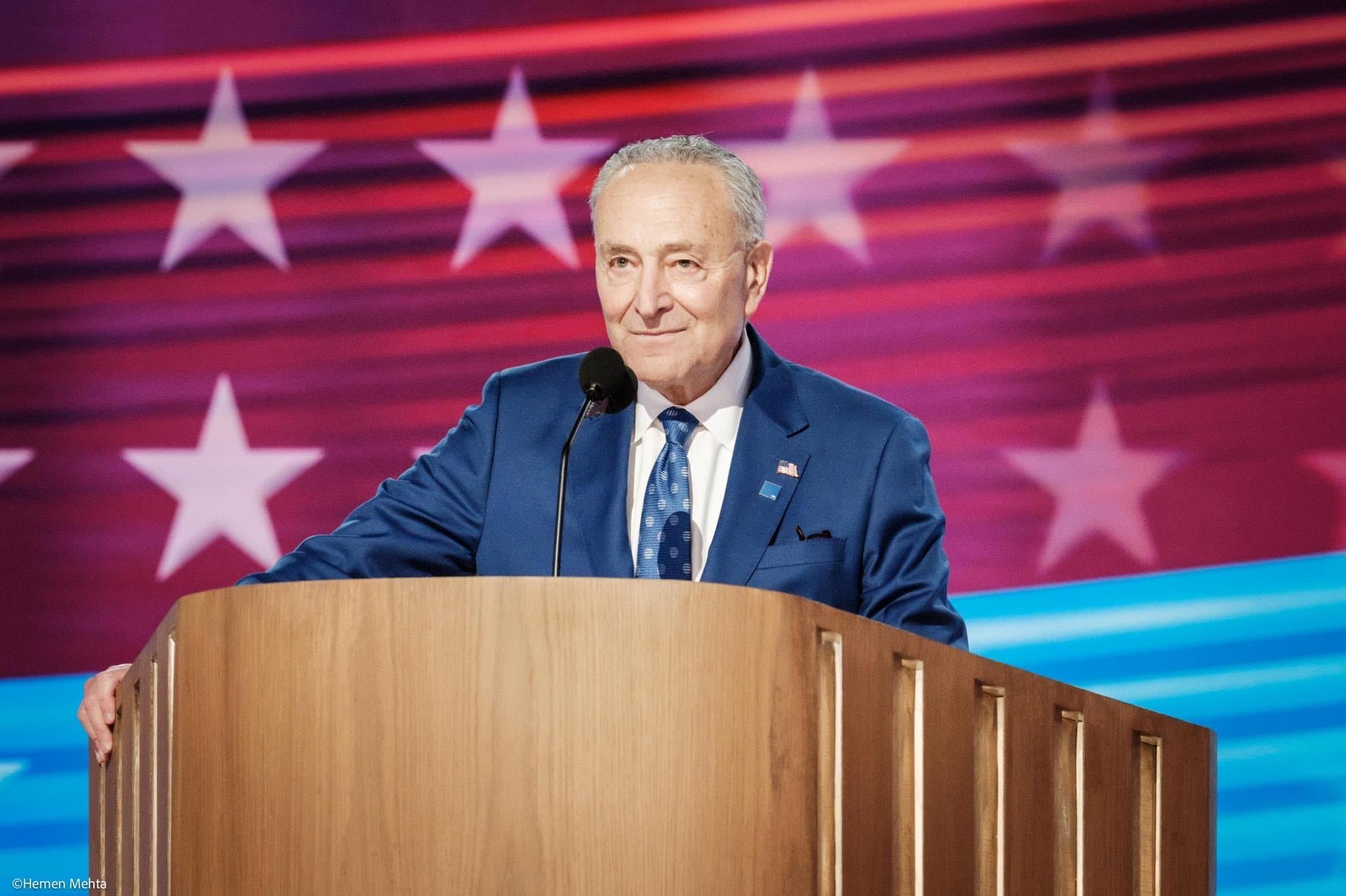
Senate Minority Leader Charles E. Schumer (D-N.Y.) is in a stronger position today than he was in March 2025, when he caved and supported the Republican continuing resolution. Still, his fundraising numbers portend his return to private life when his seat is up in 2028.
Schumer was adamant on March 12, 2025, that Senate Democrats would oppose the House-passed CR. The next day, however, he announced on the Senate floor that a government shutdown would be more disastrous than simply passing the bill.
Then, despite howls from Democratic grassroots activists and donors, Schumer and a handful of Senate Democrats joined Republicans to breach the 60-vote threshold required to end debate and bring the bill to the floor.
Schumer learned his lesson, and since that stumble, the minority leader has never again been so cooperative.
His mistake was generational—or, rather, paradigmatic.
Schumer came up in the Nixon-Reagan Paradigm, from 1968 to 2008, when voters expected politicians to work from the middle, seek consensus and reach out to independents. Now, in the Obama-Trump Paradigm, from 2008 to the present, the work is done from the extremes by energizing the base.
In fact, Schumer is so obsessed with presenting himself as a nonpolitical politician that he has, for years, anchored himself to an imaginary middle-class couple called the Baileys.
Since learning his lesson, Schumer has been playing to the base, and it has paid dividends. His forthright determination has foiled Majority Leader John R. Thune (R-S.D.), and he has been able to peel off Republicans on budget, tax and war-powers votes.
It may come to pass that Democrats retake the Senate, but even if Schumer holds on to his leadership position, his fundraising numbers point to a tough campaign in 2028. According to reports covering Jan. 1, 2025, through June 30, 2026, Friends of Schumer recorded $990,636 in total receipts, $2.31 million in expenditures and $8 million in cash on hand.
During those 18 months, the political action committee spent $1.32 million more than it raised.
Having $8 million on hand is respectable more than two years before the election, but it represents a shocking drop-off from his position in 2022.
At the end of June 2022, Friends of Schumer had $38 million on hand, topping all other Senate committees. Later that year, in September, he transferred $15 million to the Democratic Senatorial Campaign Committee and struggling Democratic candidates.
In the 2022 cycle, Senate Democrats were defending only 14 seats, while the GOP was defending 21—yet, despite having a Democrat in the White House, Schumer and the Senate Democrats picked up a seat.
Right now, it is not realistic to consider a Republican challenger a serious threat to Schumer. In his first Senate campaign, Schumer beat Alfonse M. D’Amato in 1998 by 10.5 points. In his next four campaigns, the leader won with 71 percent in 2004, 66 percent in 2010, 71 percent in 2016 and 57 percent in 2022.
Thus far, two strong potential 2028 primary challengers are attracting attention: Rep. Alexandria Ocasio-Cortez (D-N.Y.) and Rep. Ritchie J. Torres (D-N.Y.). There could even be a return from the political grave for former New York Gov. Andrew M. Cuomo.
Polls are important, but money is what counts. No candidate quits until the money quits—and for Schumer, the money seems to be getting a little tired.
You Might Also Be Interested In

GUEST EDITORIAL: How the Battle for the U.S. House Runs Through New York

Long Island Real Estate: Buyers Still Have a Seat at the Table

Congress Is Asleep While Iran Rewrites the Rules of Economic Warfare