
Adams Cites Paris Unrest as He Urges Mamdani to Reverse Disbanding of NYPD Protest Unit
The former mayor points to the Strategic Response Group as the reason New York has avoided the riots seen in Paris
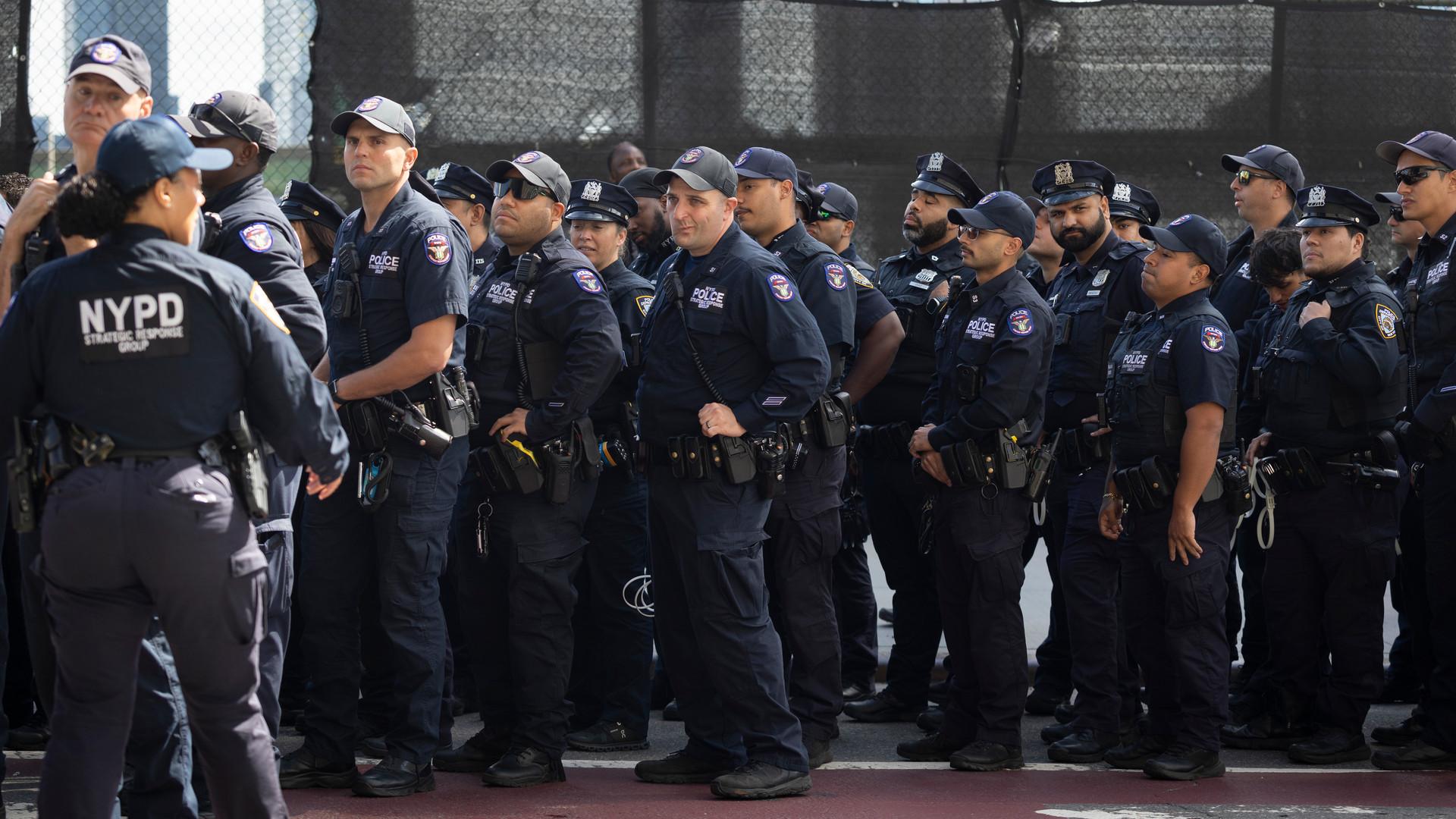
Former Mayor Eric Adams late Monday called on City Hall to reverse Mayor Zohran Mamdani's plan to dissolve the Strategic Response Group, an NYPD unit, pointing to the unit as the reason New York has avoided the riots seen in Paris this fall. His post followed Monday morning's announcement by Mamdani and his police commissioner, Jessica Tisch, that the unit, which dates to 2015, will be disbanded and its duties divided among other NYPD divisions.
In a long X post at 10:51 p.m., Adams wrote, "There is a reason New York City has not experienced the kind of violent riots we have witnessed in Paris and other major cities around the world. We had the NYPD’s Strategic Response Group (SRG), a specialized unit of highly trained officers prepared to confront violence before it spiraled out of control." He said the unit "was not created to silence peaceful protesters" and added, "You cannot reason with a brick flying through a storefront. You cannot negotiate with a Molotov cocktail." He closed: "City Hall should reverse this decision before New Yorkers discover the consequences the hard way."
Commissioner William Bratton announced the unit in January 2015 as a group of 350 officers and said it was "designed for dealing with events like our recent protests." Reform advocates objected, and the next day James O'Neill, the NYPD's chief of department, told reporters the unit would have no role in protests and would do counterterrorism work.
A December 2020 report by the city Department of Investigation said the NYPD has relied on the unit as a primary resource when responding to large protests, including the George Floyd demonstrations. Investigators wrote that kettling, mass arrests, baton use and pepper spray failed to strike an appropriate balance with protesters' rights, and recommended that the department "reevaluate the central role" of the unit and the Disorder Control Unit in large protests. The report also said the protests were largely peaceful but included numerous incidents of violence toward officers, property damage and looting.
The Civilian Complaint Review Board later substantiated 269 misconduct allegations against 146 NYPD officers at those protests, a count that covers officers across the department. In September 2023, the city settled lawsuits brought by Attorney General Letitia James and civil rights groups over its 2020 protest response. Adams, then mayor, announced the agreement. "The right to peaceful protest is a fundamental part of American freedom, and the right to public safety is essential for our city to function," he said at the time. The agreement created a four-tier response system, barred SRG officers from traffic-rerouting posts at the lowest tier and required the NYPD to stop kettling. In February 2024, a federal judge denied a motion by the Police Benevolent Association to block approval of the settlement.
Under Mamdani's plan, the unit's counterterrorism work moves to the Intelligence and Counterterrorism Bureau. A new Patrol Support Division of vetted officers will receive crowd-management training and make arrests at protests only rarely. Dialogue with demonstrators falls to a civilian-led division that has no weapons or arrest powers, along with a 30-officer NYPD team. Kettling and tear gas are banned at protests, as are long guns. "New Yorkers exercising their constitutional right to protest should not be met with the same police response as a terrorism threat," Mamdani said.
Mamdani said in a video that "Trained officers can be called upon to come make arrests, including for those engaging in civil disobedience." Tisch, in a joint television interview with the mayor, said, "Nothing would change about the way that the NYPD responds to crowd control conditions, like, for example, the celebrations following the Knicks' epic championship." As of about 9:15 a.m. Tuesday, no public reply from Mamdani to Adams had surfaced.
The French unrest began in September with protests over school conditions and spread to living costs. Rioting on Oct. 17 produced some of the worst unrest France had seen in years, and on Oct. 31 petrol bombs were thrown at gendarmes and police in Paris. On Nov. 14, the interior ministry counted 24,000 marchers in Paris, lower than at earlier protests.
The next decisions belong to lawmakers. State Sen. Sam Sutton and Joey Saban, an assemblymember-elect, said they are looking at Albany legislation that would codify specialized police response capabilities. The CURB Act, sponsored by Councilmember Chi Ossé and endorsed by Mamdani, remains pending in the City Council. Council passage would put the protest limits into city law, and Albany action would do the same for specialized response capabilities. Until then, the plan announced Monday rests on the decisions of the mayor and the police commissioner.
You Might Also Be Interested In
Mamdani and Tisch Disband the NYPD Strategic Response Group
Democrats Credit Even-Year Election Law for Local Gains as Suffolk Party Feuds Over Close Races
Police Kill Van Driver on Belt Parkway After 911 Callers Feared an Abduction