Netanyahu Offers Eisenkot the First Turn as Prime Minister
Eisenkot proposed a 24-hour test of Likud's seriousness, and Likud says the two rivals have agreed to meet
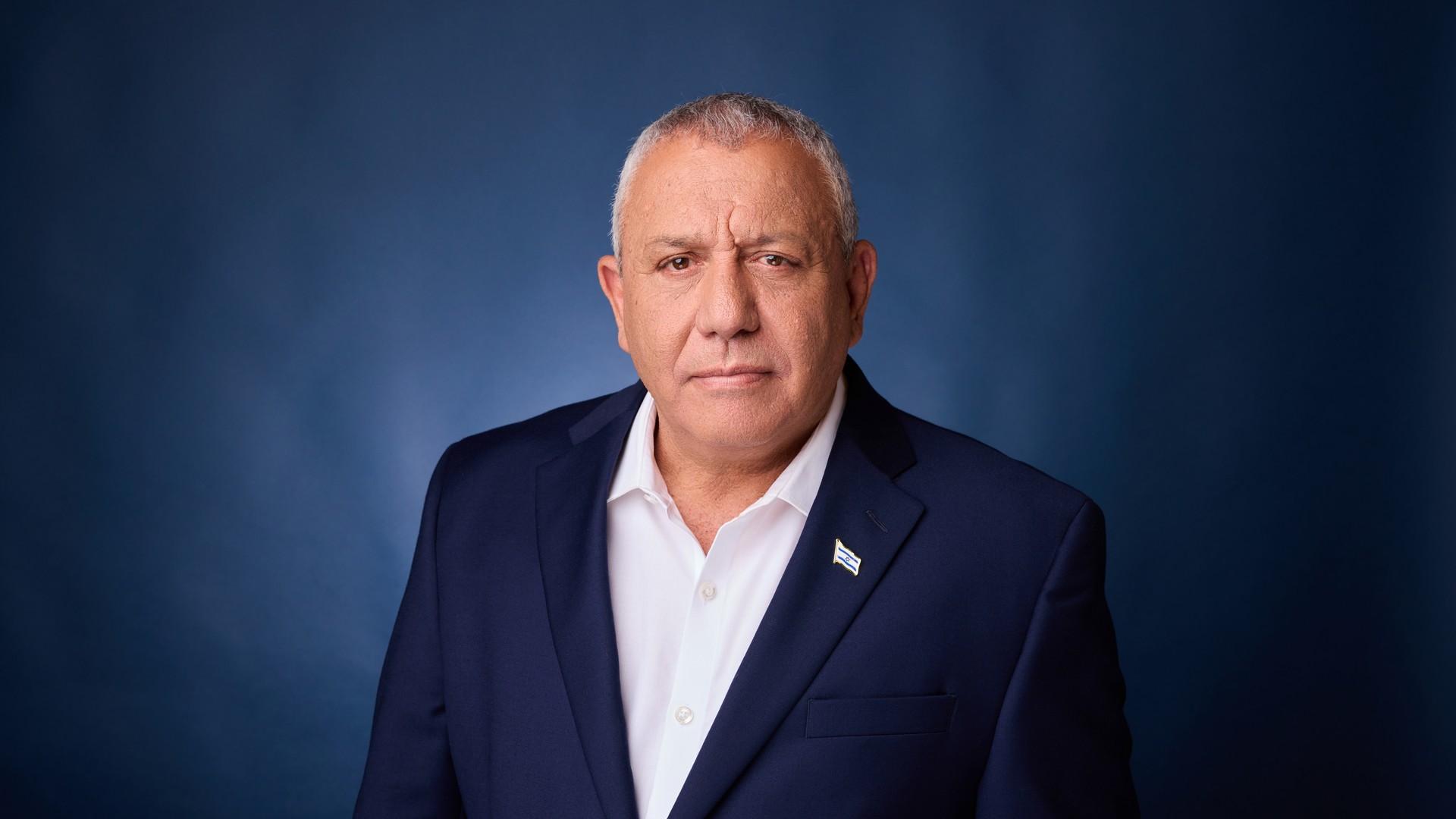
Caretaker Prime Minister Benjamin Netanyahu offered on Saturday to let rival Gadi Eisenkot serve first in a rotating premiership, setting aside his claim as head of the largest party. Eisenkot did not accept outright, and Likud said the two will meet Sunday.
Netanyahu made the offer in an address to Israeli citizens posted on his X account. All quotations from posts in this story are translated from the Hebrew. He wrote that, as head of the largest party, he should naturally lead a unity government or at least go first in a rotation, then dropped that position. He wrote that "in light of the magnitude of the existential danger," his responsibility "obligates me to put everything aside, including the principle of the largest party." He agreed, he wrote, that Eisenkot "will serve first as prime minister, and I will serve at the beginning of the term as alternate prime minister."
Netanyahu said Likud finished about a quarter of a million votes ahead of Eisenkot's party, and the final results of the October election bear that out. Likud won 27 seats to 21 for Yashar and finished about 254,000 votes ahead.
Eisenkot answered in under two hours. He wrote: "If Likud is ready for genuine unity, I am prepared to test its seriousness over the next 24 hours." He asked Netanyahu to bring his staff to a hotel in Herzliya that night, where Eisenkot was with his own negotiating team, for talks on "basic guidelines and policy issues." He said a detailed proposal went to Netanyahu on Nov. 22 through a confidential channel and drew no answer.
Likud then said the two leaders had spoken by phone and would meet the next morning at the same hotel. The meeting is scheduled and has not yet taken place.
The offer follows a sharp exchange the day before, when Eisenkot posted that the two negotiating teams had met five times in two weeks and that Likud had put no concrete proposal on the table. He accused Likud of running down the clock on his mandate and dragging Israel into another election "under the outgoing government." He said eight days remained and that he intended to form a government within them.
President Isaac Herzog tasked Eisenkot on Nov. 8. Herzog said factions totaling 67 lawmakers recommended Eisenkot, factions totaling 46 recommended Netanyahu, and one seven-member faction backed no one. Herzog said Eisenkot has "the clear and unequivocal support of a majority of Members of Knesset." Basic Law: The Government gives a designee 28 days, which end Dec. 6, and lets the president extend that period by up to 14 days in total. That post says only that he intends to use the mandate in full.
Likud's 27 seats, plus 7 for Otzma Yehudit, 7 for United Torah Judaism, 6 for Shas and 6 for Religious Zionism, make 53, eight short of the 61 that form a majority of the 120-seat Knesset. Yashar's 21, B'Yachad's 12, the Democrats' 8 and Yisrael Beytenu's 7 make 48, and the Joint List and Ra'am hold 19 more. In the same thread Eisenkot said Yashar had signed coalition agreements with Yisrael Beytenu and the Democrats and wanted to sign with B'Yachad. The three parties that signed hold 36 seats, well short of 61.
Opponents of Netanyahu dismissed the offer. Democrats leader Yair Golan posted: "Enough with the shticks and tricks. Netanyahu lost. Our duty is to respect the voter's will and form a government of change and rescue." Joint List leader Yousef Jabareen wrote that Netanyahu is "recycling spins in order to thwart a change of power" and urged removing him "this very week." Former Prime Minister Yair Lapid called the proposal "another transparent con by a serial fraudster who deceived every partner and violated every agreement."
B'Yachad leader Naftali Bennett took a different line, writing that Netanyahu "made the right decision" and that the burden of proof is now on him. Religious Zionism leader Bezalel Smotrich called the offer "real and sincere."
Under Basic Law: The Government, a rotation government must tell the Knesset who serves first, who serves as alternate, the date of the handover and which ministers belong to each camp. The handover itself needs no new confidence vote. Netanyahu's post names none of those terms beyond who goes first.
The meeting scheduled for Sunday is the first chance to settle those terms. Until it ends, no public statement from either leader sets a handover date, a ministry split or a shared platform, and the mandate clock keeps running toward Dec. 6.
You Might Also Be Interested In

Moscow Mayor Says About 460 Drones Flew Toward Capital Region Overnight

Congo Ebola Cases Top 12,000

Ukraine Offers Black Sea Farm-Cargo Truce and Awaits Russia's Answer