

U.S. Death Toll Rises in Iran War as Houthis Blockade Saudi Arabia
Three American service members died over the weekend as Iran-backed forces opened new fronts in the conflict

Three American troops died over the weekend in Iranian strikes on U.S. military positions across the Middle East, pushing the conflict's cumulative American death toll to 17. President Donald Trump pledged that Iran would face severe consequences for each U.S. soldier lost.
The Pentagon named two of the dead as First Lt. Tyler James Feehan, 25, of Ewa Beach, Hawaii, and Pvt. Isabella Gonzales, 19, of Carrollton, Texas. U.S. Central Command said both were killed in Jordan while repelling a coordinated Iranian attack involving ballistic missiles and drones. A third service member was killed separately in northern Iraq when unexploded ordnance from a downed Iranian drone was detonated in a disposal operation.
"Every time Iran kills an American Soldier they will pay for that killing many times over!" Trump wrote on social media, directing the message to Defense Secretary Pete Hegseth, the chairman of the Joint Chiefs of Staff and other senior commanders. The White House said Trump would attend a dignified transfer ceremony at Dover Air Force Base in Delaware on Tuesday.
U.S. officials told reporters that nearly 100 American service members have been injured in Iranian airstrikes on bases across the region since July 7. The Pentagon said 96 percent of those casualties had since returned to duty, most having sustained only mild concussions.
Following confirmation of the latest deaths, the U.S. military conducted its ninth straight night of airstrikes against Iran, with operations extending as far north as Tabriz in the country's northwest. Recent strike packages have focused on Iranian bridges, power infrastructure and military assets that the Pentagon has identified as priority targets ahead of more complex future operations.
Iran acknowledged receiving diplomatic proposals through intermediaries aimed at halting the renewed hostilities, though its foreign ministry spokesperson declined to elaborate and did not confirm reports that a 10-day ceasefire had been floated. Iranian officials said they were pursuing diplomacy at the same time as military operations continued, and they cautioned neighboring countries against permitting the United States to launch attacks on Iran from their soil. On Monday, Iran struck back against U.S. allies Kuwait and Bahrain, where the Navy's 5th Fleet is headquartered.
The war's reach expanded further when Yemen's Iran-aligned Houthi rebel movement announced an immediate maritime blockade of Saudi Arabia, shutting the Bab al-Mandab Strait — the narrow chokepoint at the southern entrance to the Red Sea — to ships bearing the Saudi flag. A Houthi military spokesman said the action was meant to punish Saudi Arabia for what the group characterized as a Saudi blockade of Houthi-held ports and airports.
The United Nations cautioned that the Houthi declaration risked drawing the region into "even wider" conflict. Analysts noted that with the Strait of Hormuz already effectively closed since the U.S.-Israeli campaign against Iran got underway in late February, a concurrent blockade of Bab al-Mandab could cut off roughly a quarter of the world's oil and natural gas supply.
Energy markets responded swiftly. Brent crude reached $91.42 per barrel on Sunday before easing slightly on Monday. U.S. pump prices averaged more than $4.00 per gallon for the second week in a row, up from $3.87 the prior week, the American Automobile Association reported.
Tensions over shipping intensified further after a British maritime agency reported that two vessels were hit near the Strait of Hormuz on Sunday by unidentified projectiles. One ship sustained damage to its steering system; the other broke out in fire and was left drifting, though all crew members on both ships were reported to be safe.
Iranian officials said American strikes over the preceding three weeks had killed at least 50 civilians and left more than 500 others injured. The broader human toll — including maritime workers, foreign nationals in Gulf states, and people in Israel and Lebanon — has continued to grow as the fighting has intensified.
You Might Also Be Interested In
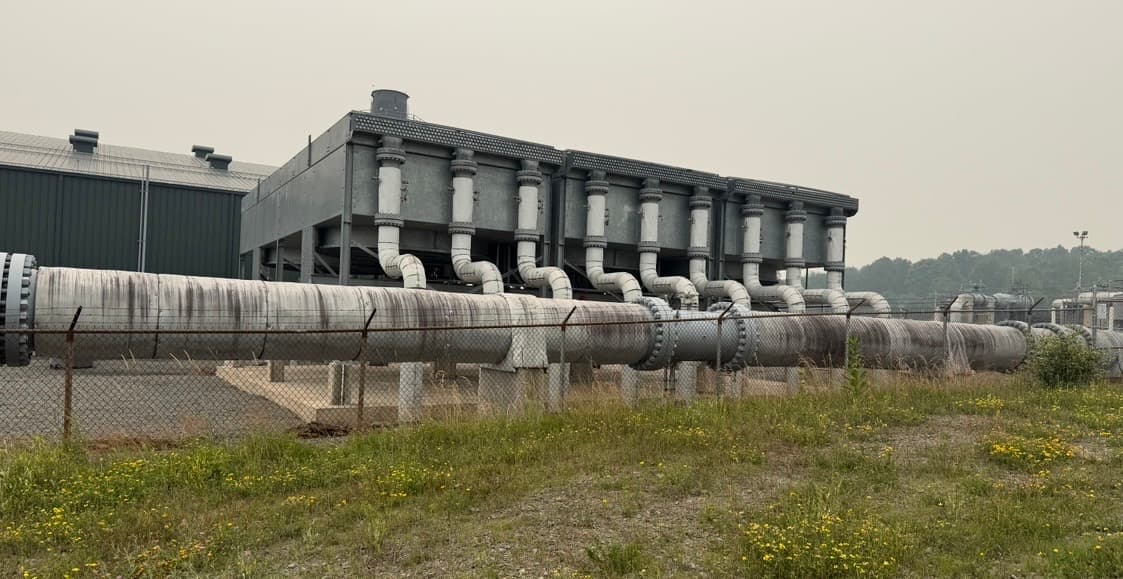
How Much Oil and Gas Does The Earth Have Left To Give?

Film Examines China’s Efforts to Weaken America

Trump Launches Economic Asphyxiation Campaign Against Iran
