Iran's Lashes for a Song Leave Western Moral Equivalence Nowhere to Hide
Tehran cheered an unveiled foreign star at its own rallies this spring, then whipped a homegrown singer for the same bare head
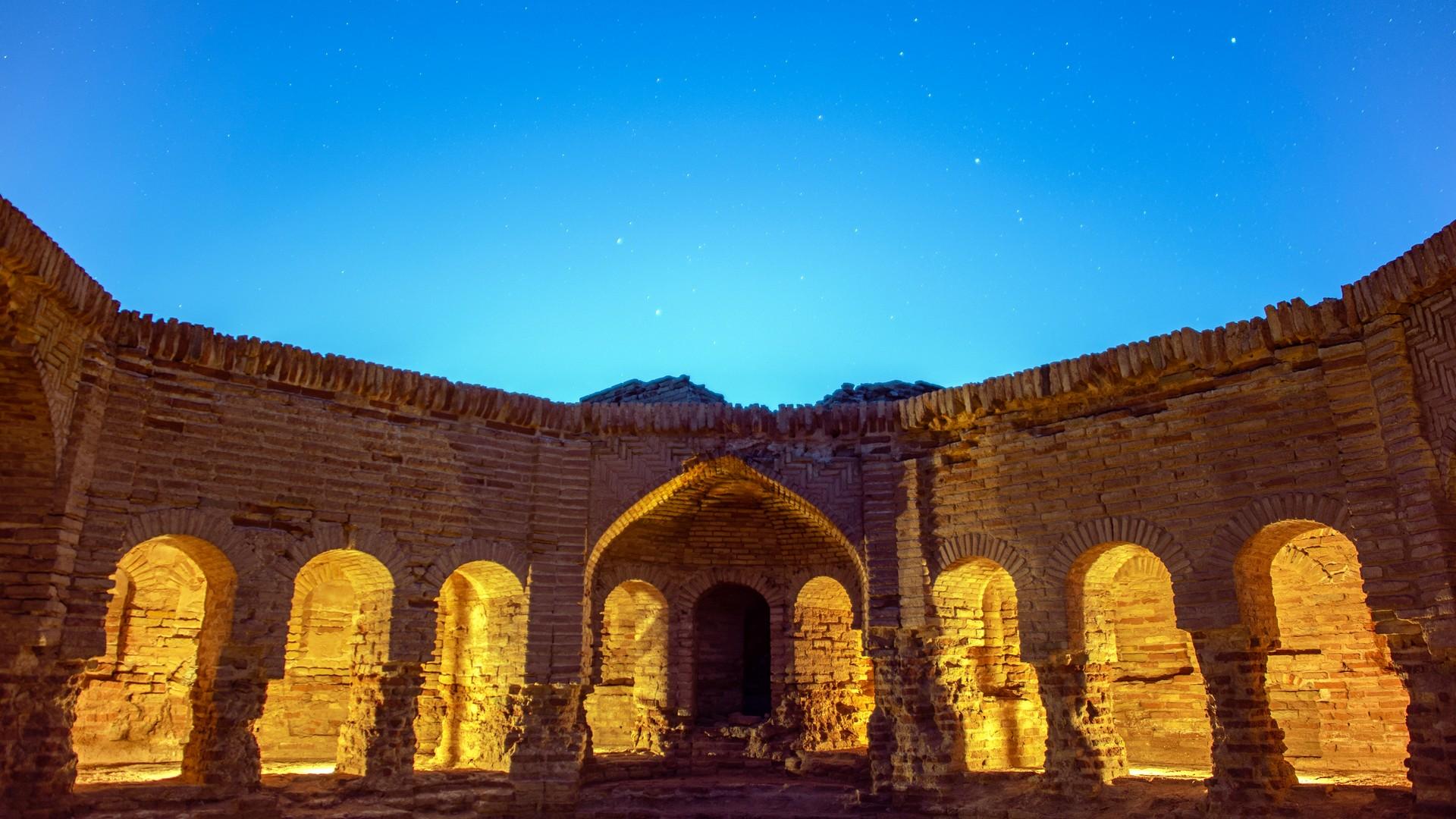
Parastoo Ahmadi sang with her hair loose and her shoulders bare, in a long black gown, inside an empty caravanserai near Qom, and on Nov. 23 the Islamic Republic answered her with 74 lashes.
Male musicians in black played beside her, and no audience sat in front of them. The film went up on YouTube in December 2024 and has since drawn millions of views. Four colleagues, three musicians and the man who organized the shoot, took the same 74 lashes apiece in the prosecutor's office in Qom.
In June a Qom criminal court found the group guilty of offending public decency by putting obscene and immoral material online, and an appeals court upheld the verdict in late September. On top of the whipping, each of the five is barred for two years from making music and from leaving the country.
In April, pro-government gatherings in the capital screened concert footage of Julia Boutros, the Lebanese singer famous in Arab countries for anthems in praise of the "resistance," performing with her head uncovered before crowds of men and women. For nearly half a century Iran has barred a woman's solo voice before male listeners, and the footage played anyway, at events staged in the regime's own name. A rule that relaxes for a foreign celebrity who flatters Tehran's allies, then snaps back with full force on a 29-year-old Iranian singing to her own countrymen, is no principle at all.
Since Mahsa Amini died in the custody of the morality police in 2022, growing numbers of Iranian women have walked the streets without the hijab. The clerics have watched compliance erode while the country buckles under months of conflict and an economy that keeps getting worse. Mahmood Amiry-Moghaddam, who runs a Norway-based human rights group, put the contradiction plainly. "A government that is incapable of resolving the crises of livelihoods, water and electricity, yet does not hesitate to flog a woman for her voice, has reached the end of its life," he wrote.
Tehran routinely brushes off foreign rebukes over its treatment of its people and tells Western governments to mind their own abuses. That deflection should sound familiar to Americans, who have heard a version of it at home for years, every time a condemnation of a foreign tyranny is met with a lecture about the sins of the country doing the condemning. A free country with flaws stands on different moral ground from a theocracy that sends women and their accompanists to be whipped for a video, and no amount of rhetorical balancing makes the two equivalent.
Mike Waltz, the American ambassador to the United Nations, refused that bargain when he called the punishment "pure medieval barbarism" and declared that "the United States stands with the Iranian people against this tyranny." The United Nations human rights chief, Volker Türk, called the floggings "abhorrent" and reminded Tehran that flogging is torture, banned under international law without exception. Spain's foreign ministry condemned the punishment as cruel and inhuman.
In October 2022, more than 50 French actresses and singers, Juliette Binoche and Marion Cotillard among them, filmed themselves cutting off locks of hair in solidarity with Iranian women, and Binoche declared "For freedom" as the scissors closed. The gesture cost nothing, but it said something. This time the loudest condemnations have come from diplomats and from Iranian artists who know the whip firsthand. Among them is Mehdi Yarrahi, who absorbed 74 lashes of his own last year at the close of a case that began with a song urging women to take off the scarf.
Awards season is about to fill red carpets with performers who speak often and fluently about artistic freedom and the right of women to control their own bodies. No case fits those causes more exactly than a young woman whipped for singing in a dress of her choosing. A single sentence from a podium, her name spoken before a global audience, would carry into Iran and tell the men in Qom that the world noticed.
Ahmadi is barred from making music and from travel abroad for two years, and the four men flogged beside her carry the same bans. If the stars who once cut their hair for Iranian women cannot find time to say her name before those bans expire, the clerics in Qom will have learned precisely how much Western outrage is worth.
You Might Also Be Interested In
Mamdani's Departing Unit Held the Line in Midwood. What Replaces It?

Washington's Next Health Plan Starts at Age 55, and Albany Wants to Finish the Job

An Unfunded Plan to Starve Speech Is Still a Scandal