Mamdani's Departing Unit Held the Line in Midwood. What Replaces It?
After February, a 30-officer dialogue team and a new patrol unit will inherit crowds like the one that pushed barricades in Midwood.
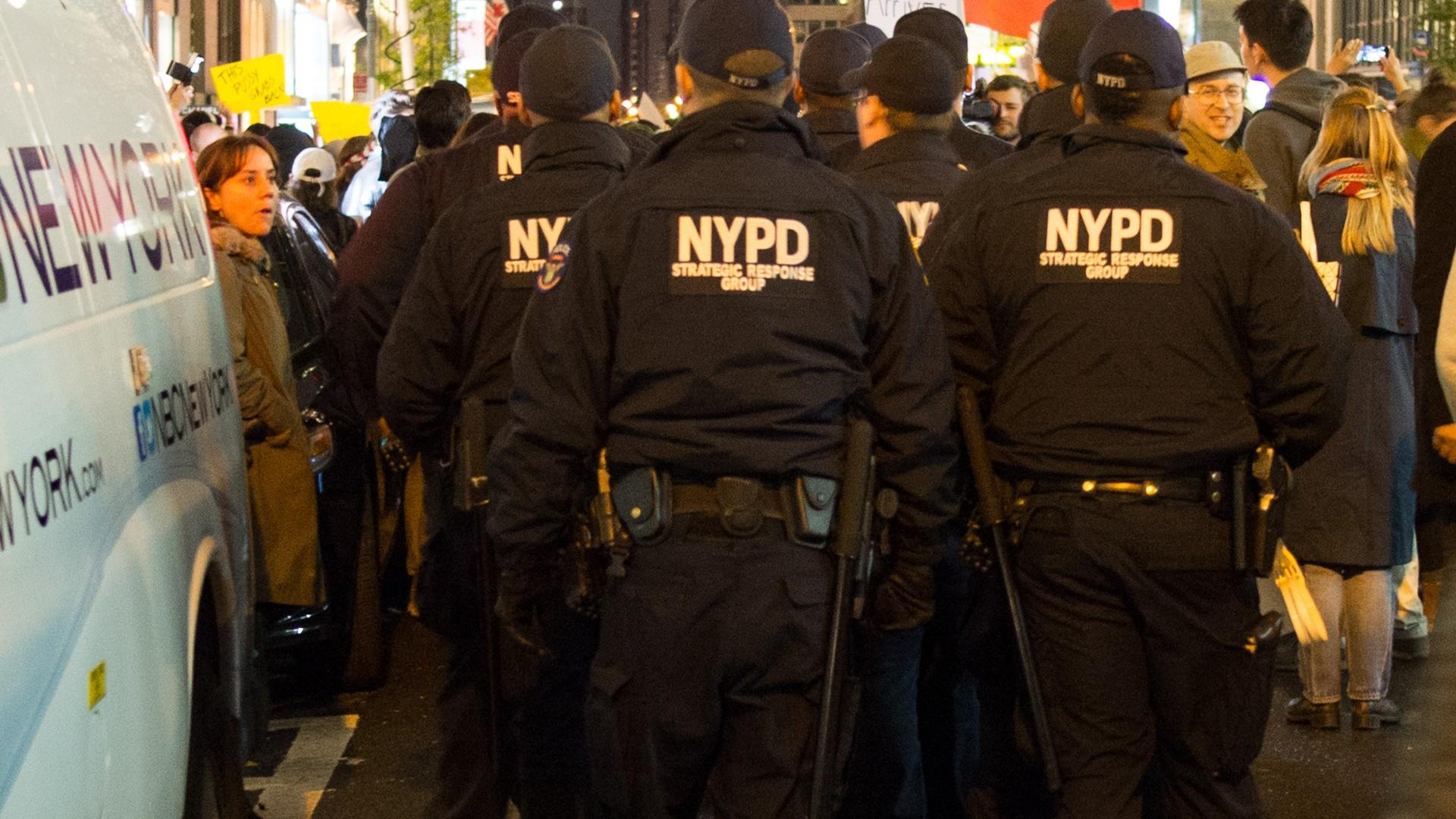
On Nov. 25, officers from the Strategic Response Group, the NYPD unit Mayor Zohran Mamdani has decided to break up, held a police line on Coney Island Avenue in Midwood as a crowd pushed at barricades outside a kosher deli.
The announcement on Nov. 16 was a campaign promise kept on paper. The mayor and Police Commissioner Jessica Tisch said they would dissolve the group and split protest work from counterterrorism. In a briefing the next day, the mayor said the plan would take effect in 90 days, a timetable that lands in mid-February, and that the new civilian office inside the mayor's community safety office would not open until 2028. Until then the Strategic Response Group remains the department's unit for large and disorderly protests, which is the work it did in Midwood.
On Nov. 25, Pal-Awda, an anti-Israel group based in New York and New Jersey, urged a crowd to gather at Essen NY Deli, a kosher restaurant in Midwood, to protest a private event hosted by the Israeli brokerage CapitIL. The organizers said the event was a sale of land in the West Bank and in eastern Jerusalem. CapitIL rejected that claim and said the properties shown were in Jerusalem, in Netanya, and in Herzliya. The police said about 200 pro-Palestine demonstrators and about 200 pro-Israel demonstrators faced one another near Avenue J. Video from the scene showed people shoving metal barricades as officers tried to hold them, and protesters chanting "Intifada revolution." A Palestinian flag was burned in the street. Police said three people got court summonses on disorderly conduct charges.
Officers at the scene wore jackets and shirts bearing the unit's name. The replacements the mayor announced are not in place yet. His plan calls for a civilian dialogue office with no weapons and no power to arrest, along with a 30-officer team in the Community Affairs Bureau trained for conversation and calm. A new patrol support unit would sit in the department's patrol bureau. Of those pieces, only the patrol unit is meant to make arrests at protests, and the City Hall release says it will do so in rare instances.
Two large crowds pushed at the same barricades outside a Jewish business in a Jewish neighborhood, and the formation built to handle a disorderly turnout was the one on the street.
"New Yorkers exercising their constitutional right to protest should not be met with the same police response as a terrorism threat," the mayor said in the City Hall release. "We are establishing a new, civilian-led approach that prioritizes dialogue, engagement and de-escalation." Those sentences assume a protest that stays a protest. Shoving a police line in front of a kosher deli, while calling for intifada, is a safety problem, and it is one the new civilian office, unarmed and not due to open until 2028, is not built to solve. In the same release, Tisch said the planned changes would not strip the department of what it needs to protect the city or to face a serious threat.
The organizers asked the mayor to shut the event down. The brokerage said the night exposed open hatred of Jews on a public street. A large anti-Israel protest and a large counter-turnout met on Coney Island Avenue. The police line came under pressure. The unit scheduled for abolition held it.
The organizers assailed the mayor over the police response. The people who wanted the group abolished objected to its presence when they tried to press a Jewish restaurant.
No public account says who sent the unit to Midwood that night, or whether the call came from police commanders or from City Hall. The mayor's office had not addressed the deployment publicly by Sunday. The 90 days end in February. From then on, the city will have to keep order at a scene like Midwood's with a dialogue team of 30 officers and a patrol unit that makes arrests only in rare instances. In 2028 a civilian office that cannot make an arrest at all joins them. The mayor owes the city an answer on how that mix would hold two crowds of about 200 pushing at the same barricades.
The mayor can move officers onto new letterheads and retire a name. He cannot retire the problem that brought those officers to Midwood. Midwood needed the unit he is abolishing, and the next crowd at a barricade outside a Jewish business will come whether the replacement is ready or not.
You Might Also Be Interested In
Iran's Lashes for a Song Leave Western Moral Equivalence Nowhere to Hide
Washington's Next Health Plan Starts at Age 55, and Albany Wants to Finish the Job
An Unfunded Plan to Starve Speech Is Still a Scandal