Hochul Signs Ban on Monthly Fees for Car Features Already Built In
Drivers keep heated seats and remote start without a subscription, though the law exempts navigation updates and satellite radio
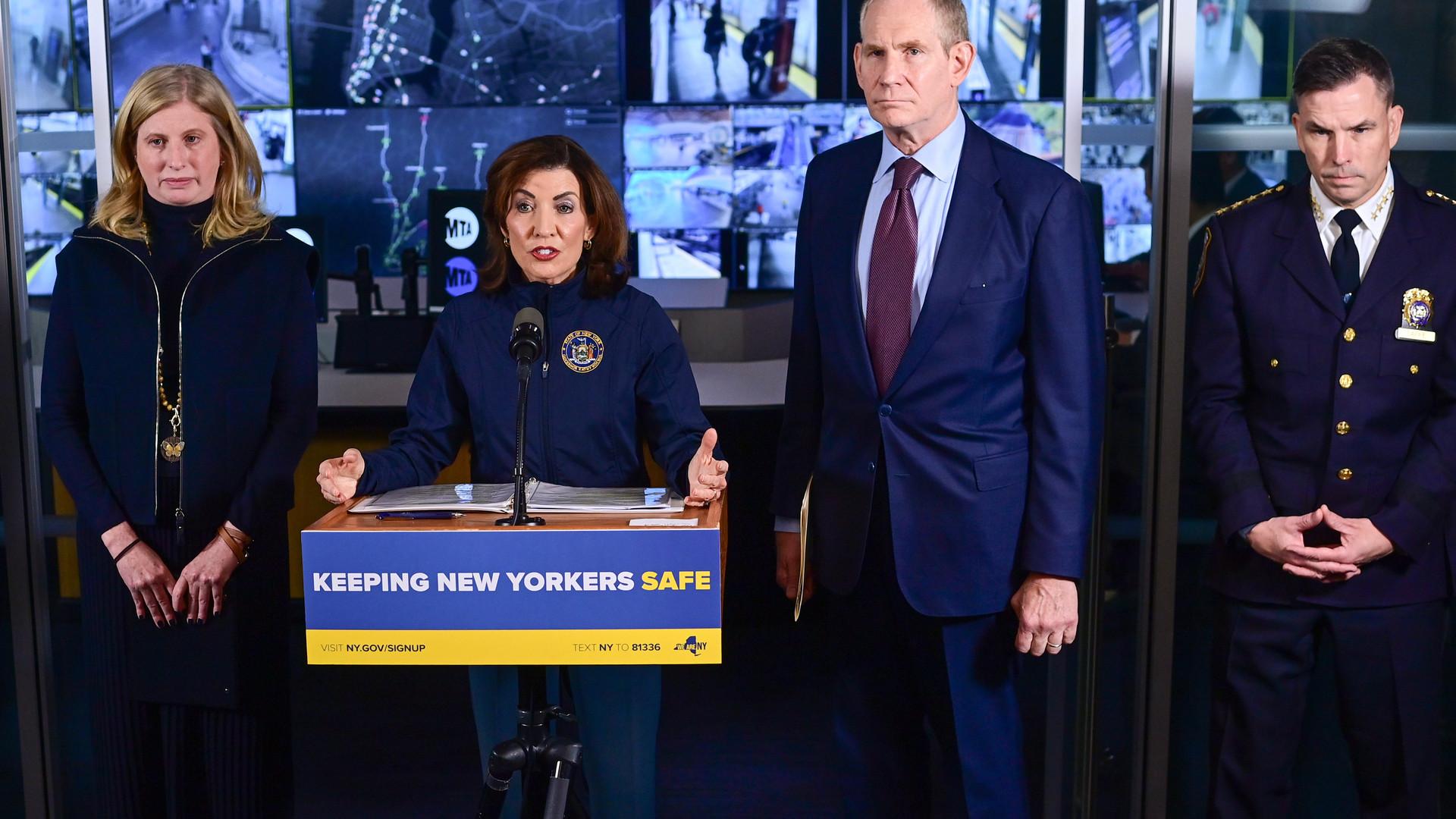
Gov. Kathy Hochul signed a law Monday that bars automakers, dealers and outside service companies from charging subscription fees for vehicle features that run on hardware already installed and cost nothing to keep running.
The ban takes effect Feb. 27, the governor's office said. Heated seats and remote start are the examples the sponsors use, and the Assembly sponsor's memo says the goal is to keep after-sale fees from becoming a standard part of how carmakers earn money.
Hochul pitched the law as a cost-of-living step and tied it to what she called "Trump's affordability crisis." In a statement she said, "People spending their hard-earned money on a car shouldn't have to fork over even more money for features that should automatically come with the car." Her message to the industry was short: "Keep your hands out of New Yorkers' wallets."
A feature falls under the law when it relies on parts already in the vehicle at purchase or lease and would work after activation without any ongoing expense or help from a dealer or carmaker, or from any outside provider. The definition of a vehicle feature covers any convenience or safety function, and it names heated seats. Buyers and lessees are both protected. A subscription means any recurring payment, from weekly to annual, and loan or lease payments on the car itself are excluded.
Violators face a civil penalty of up to $250 for each violation at each point of sale. The Department of State is authorized to write rules to carry out and enforce the law, and the bill allows that rulemaking to be finished before the start date.
The ban leaves out navigation updates, entertainment systems and satellite radio, along with Wi-Fi built into the car. It also skips telematics, roadside assistance, software-dependent driver assistance and driver automation, and any service that relies on a cellular or other data network. Carmakers may also keep sending software updates, though a fix for a safety defect that federal law requires at no charge must stay free.
Sen. James Skoufis, the Democratic sponsor, said, "People ought to know they're able to use their already-installed remote start or heated seats during the winter without a monthly subscription." Assemblymember William Magnarelli, who carried the bill in the lower house, said it will "help protect New Yorkers from unfair fees."
Attorney General Letitia James backed the measure. "No one should have to pay recurring fees just to use features in a car they already bought," James said. She added that her office has "secured millions of dollars for New Yorkers throughout the state" from car buyers who paid illegal junk fees at the dealership.
The Assembly passed the bill in May, and the Senate approved it in June by a vote of 57 to 3, the chamber's roll call shows. The law's treatment of paid driver-assist plans is less clear. The governor's release lists hands-free driving among the built-in features the law protects, while the bill's text exempts software-dependent driver assistance. Ford sells a hands-free highway system called BlueCruise for $49.99 a month, $495 a year or $2,495 at purchase through a dealer. Ford's help page says the system works only in mapped highway zones drawn from connected maps in the vehicle, and it advises owners to turn on automatic software updates.
BMW tried a hardware paywall overseas. It offered a heated-seat subscription of roughly $18 a month in markets that included the United Kingdom, Germany, South Korea and South Africa, and a company spokesperson has said it never reached the United States. BMW dropped the plan in 2023 after customers balked.
The governor's office placed the signing among earlier cost-of-living actions, including a law that makes businesses warn customers before subscriptions renew or prices change and explain how to cancel. Once the law takes effect, offering a covered subscription to a New York buyer or lessee carries the penalty, and the Department of State can issue rules before then to spell out how the exemptions apply to products such as paid driver-assist plans.
You Might Also Be Interested In
Hochul Plans New Nuclear Power as Grid Operator Projects a 2033 Shortfall
Mamdani Plan Would Close Rikers Island at the End of 2032, Pay Families of Criminals to House Them
Calls for R State Chair Cox to Step Aside. Jesse Garcia is the Man For the Job.