
Andy Burnham Confirmed as UK Labour Leader, Set to Become Prime Minister
The former Manchester mayor will take office Monday, succeeding Keir Starmer as Britain's prime minister
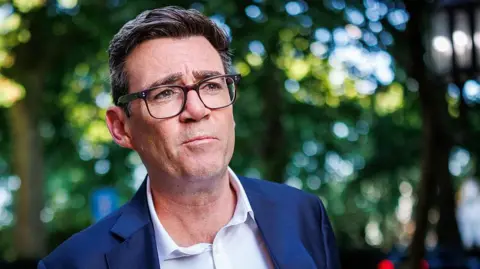
Andy Burnham, the left-leaning former mayor of Greater Manchester, was formally elected leader of Britain's governing Labour Party on Friday and is set to become the country's prime minister on Monday, replacing Keir Starmer.
Burnham secured the position at a special party conference convened at the Trades Union Congress headquarters in London, drawing overwhelming backing from lawmakers, trade unions and local party branches. He ran unopposed in a contest that was set in motion after figures across Labour's internal spectrum — both Starmer's supporters and detractors — charged the departing prime minister with failing to provide adequate leadership.
Addressing an audience of senior Labour figures and party faithful, Burnham declared that people across the country were hungry for a new kind of politics — one focused on fixing problems rather than chasing political points.
"We are united, and we put the power that comes from that unity at the service of people and places who have been waiting too long for politics to let them hope again," he said.
Burnham acknowledged that the party stood at a crossroads, describing his election as potentially a last chance to change. He pledged to lead a broad-church cabinet that would reflect all wings of the movement and promised to resist the temptation of imitating rival parties.
He said Labour would not try to out-Reform the populist Reform UK party or adopt Conservative policies, but would instead offer a confident, authentically Labour alternative.
Cost-of-living pressures, ongoing conflicts in the Middle East and Ukraine, and the growing electoral challenge from the populist right all featured prominently in his remarks. Burnham also highlighted his record in Greater Manchester as evidence that power should be devolved away from Westminster, promising what he called the biggest rebalancing of political power in modern British history.
"We will take power back from Westminster and Whitehall and give it to the place where you live," he said.
Burnham, who is 56 and a native of northwest England, entered Parliament in 2001 and served in multiple cabinet positions under Tony Blair and Gordon Brown, including as health secretary. During his time as Greater Manchester mayor he built a reputation for pushing back against centralized control and developing integrated local transit and housing systems. On X, users noted he would become Britain's seventh prime minister in a decade — a marker of the country's sustained political turbulence.
He is expected to go to Buckingham Palace on Monday, after which Starmer will formally hand over the reins of government. Burnham said he had not yet finalized cabinet appointments but pledged his top team would fairly represent contribution, experience and commitment across the party.
Burnham praised Starmer, crediting him with leading Labour from its worst electoral defeat to one of its best victories in modern history. But he also drew a clear line under the past two years, asking whether the party had been good enough and pledging to do better.
Support for Starmer had slipped sharply amid persistent cost-of-living pressures, two active wars, and the rising popularity of Reform UK and other far-right movements in the polls.
Reaction on X centered largely on the scale of the political transition underway, with users describing Burnham's ascent as a significant reset for the Labour government. Some posts highlighted his populist appeal and regional identity as defining traits he would carry into Downing Street.
Burnham's arrival in Downing Street will also test Britain's relations with China. Earlier this week, Parliament passed legislation enabling the full nationalization of British Steel, whose Chinese owner, Jingye Group, has demanded compensation and said the move seriously damaged the confidence of Chinese companies investing in Britain.
You Might Also Be Interested In
Film Examines China’s Efforts to Weaken America
Trump Launches Economic Asphyxiation Campaign Against Iran

Treasury Chief Vows to 'Collapse' Iran With Historic Sanctions