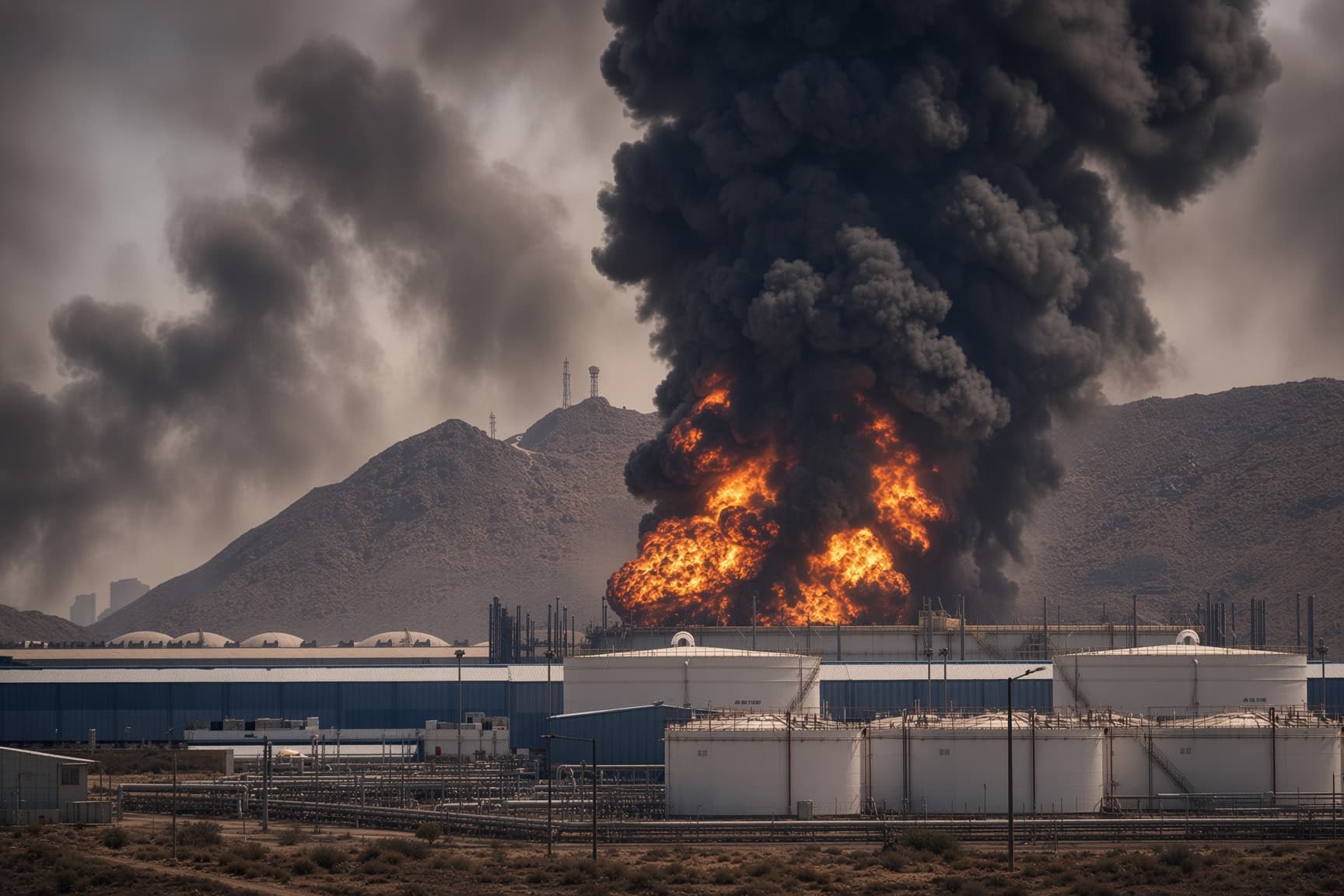

U.S. and Iran Trade Widening Strikes Across Middle East
American forces hit Iranian bridges and a port tower as Tehran fired missiles at Gulf allies hosting U.S. bases
U.S. forces wrapped up a sixth consecutive night of bombing runs against Iran before dawn Friday, broadening the offensive to target bridges, electrical infrastructure and a port control tower, while Tehran struck back with missiles and drones aimed at American-allied countries throughout the Gulf.
U.S. Central Command announced that the overnight assault ended at approximately 1:40 a.m. GMT Friday, hitting dozens of Iranian military sites — among them air defense installations, logistics networks and maritime facilities. Central Command said more than 50,000 U.S. service members are currently deployed across the Middle East.
In Hormozgan province in southern Iran, at least six bridges were struck, including several linking the port city of Bandar Abbas to surrounding areas, along with a railway junction and additional sites. Iranian state media reported at least seven people killed and more than 20 wounded in the overnight bombing. Iran's Health Ministry put the cumulative death toll since fighting resumed at a minimum of 38 killed and more than 400 injured.
The control tower at Chabahar port, situated on Iran's Gulf of Oman coastline, was also brought down in the strikes, according to Iranian state media. Separately, U.S. forces boarded a vessel in the Gulf of Oman as part of enforcement of the naval blockade reimposed earlier in the week, and turned away three additional ships that attempted to pass through it.
In a primetime address to the nation, President Donald Trump declared that the United States was "winning big in Iran" and that results would be visible "very, very shortly." Earlier in the week, Trump had warned he would order strikes on Iranian bridges and power plants if Tehran did not return to ceasefire talks.
The interim ceasefire brokered last month — meant to reopen the Strait of Hormuz and end hostilities — has largely fallen apart. The strait ordinarily carries roughly 20 percent of the world's oil supply, and shipping traffic through it has dropped sharply since the conflict resumed. The chief executive of a Greek maritime risk management company described the situation as "the worst case scenario," saying ship crews were refusing to transit the waterway.
The near-paralysis of traffic through the strait has been stark. Users on X pointed to ship-tracking data showing only two vessels transiting the strait on Thursday morning, with marine insurers reassessing coverage as military strikes continued to escalate.
Iran responded by targeting U.S. military installations across the region. Air raid sirens were triggered in Bahrain, where Iran claimed to have struck aircraft at Sakhir airbase. Qatar issued two shelter-in-place orders after Iranian projectiles — all of which were shot down — were directed at Doha; the Qatari Ministry of Interior said a child was hurt by falling shrapnel. Jordan's military reported it intercepted and destroyed three Iranian missiles. Kuwait said Iranian strikes damaged a power generation and water desalination facility, a consequential hit in a nation that depends on desalination for nearly 90 percent of its drinking water. Iran's Revolutionary Guard also asserted it struck U.S. positions in Syria, Oman and Iraq's Kurdistan region.
The U.S. military neither confirmed nor disputed Iran's claims of successful strikes, and Iranian forces have a track record of overstating such results.
Reaction on X reflected deepening alarm over the conflict's trajectory. Users widely flagged Iran's declaration that the Strait of Hormuz constitutes an "unbreakable red line," with Tehran warning that any U.S. strikes on its infrastructure would trigger further retaliation across the Gulf. The sentiment underscored fears of a broader regional conflagration at a chokepoint critical to global energy markets.
China's foreign minister and Pakistan's foreign minister each called Friday for an immediate halt to hostilities and a resumption of dialogue. A senior analyst at Rystad Energy said a partial deal between the two sides remained the firm's most likely scenario, though confidence in that outcome had eroded.
Oil prices surged in the wake of the latest escalation, with the international benchmark Brent crude climbing more than 2 percent to above $86 a barrel on Friday — putting it on course for a weekly gain of more than 11 percent, the steepest in months. Global equity markets retreated, with semiconductor and technology stocks pacing the declines across Asia and Europe.
You Might Also Be Interested In

Film Examines China’s Efforts to Weaken America

Trump Launches Economic Asphyxiation Campaign Against Iran

Treasury Chief Vows to 'Collapse' Iran With Historic Sanctions